

A compact instrument with surprising expressive range, the melodica has found its place in today’s music scene. Its sound is reminiscent of both the accordion and the harmonica, making it instantly recognizable and rich in tonal color.
Easy to carry, it makes playing accessible at every skill level. Beginners and professionals alike appreciate its simplicity, which makes it easy to explore ideas quickly and enrich arrangements.
In addition to its distinctive tone, its versatility makes it useful in a wide range of projects: concerts, shows, and soundtracks. Contemporary forms combining theater and music often use this instrument. For an example of its use on stage and in multi-instrumental performance, read this article.
In practice, discovering its sonic capabilities encourages artists to refresh their creative approach. The enjoyment is immediate and the impact long-lasting.
What is a melodica, and how does this instrument work?
The melodica combines the simplicity of a small keyboard with the breath of a wind instrument. It looks like a miniature piano, but its sound-producing principle relies on free reeds.
Origins and design
“Johann Nepomuk Mælzel’s panharmonicon (1804) inspired many free-reed instruments.”
The Hohner brand popularized this type of instrument in the twentieth century. Hohner designed sturdy models suited to the moisture produced by the player’s breath.
Sound-production mechanism
It works using the air blown by the musician. The breath passes across metal reeds, which vibrate to produce the note.
- A small keyboard directs the airflow toward specific reeds.
- Its use of reeds makes this instrument similar to the harmonica and the accordion.
- The keys control the melody while keeping the instrument highly portable.
To hear from professionals, read this article about the profession of melodica player.
Why the melodica is winning over more and more musicians
The ability to shape every note with air gives this instrument unusual expressive power. Players can change the dynamics by adjusting their breath pressure, just as on a harmonica, but using a small keyboard.
In 1966, composer Steve Reich demonstrated the melodica’s artistic potential with his work Melodica. The piece shows that the melodica goes beyond the classroom and has a place in contemporary composition.
The Hohner brand made the instrument more widely accessible. Its sturdy, affordable models appeal to fans of jazz, pop, and experimental music.
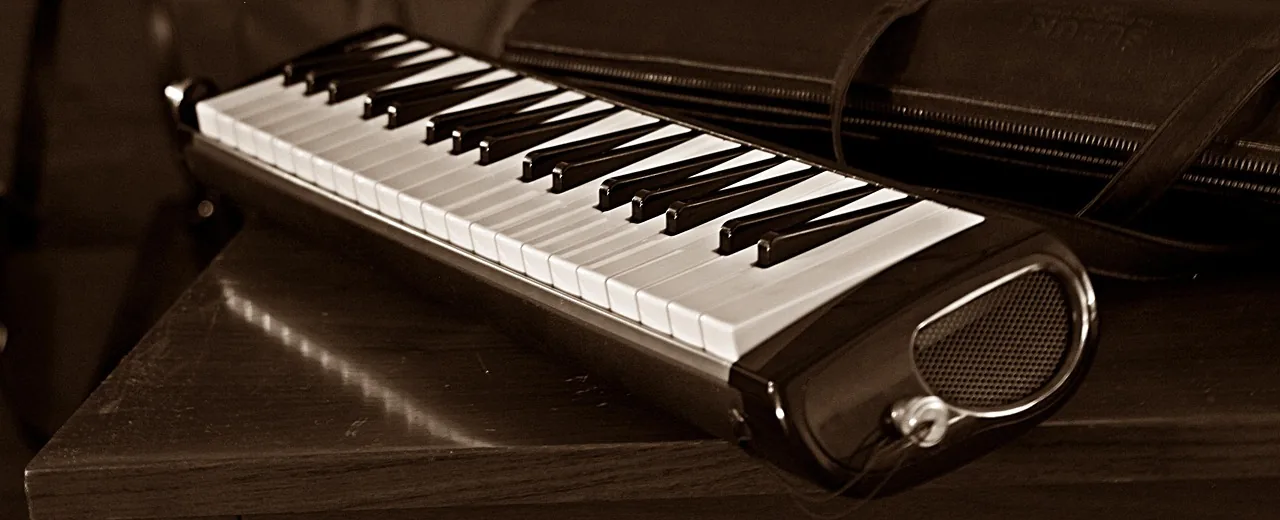
Unlike the piano, this wind instrument lets players shape every note in real time. The keys remain intuitive, making it easier to learn how the instrument works and to create complex arrangements.
“Breath transforms a keyboard gesture into a living line.”
High-quality reeds ensure accurate tuning and longevity. Musicians therefore find remarkable versatility in these instruments, somewhere between a harmonica, a pump organ, and a compact keyboard.
For an in-depth article about this unusual instrument, read the melodica, an unusual instrument.
An ideal educational tool for learning music
For beginners, this instrument provides an accessible route into reading music and playing a keyboard.
Developing coordination
Breath–hand coordination: playing requires the musician to synchronize breathing with the pressure applied to the keys. This strengthens fine motor skills and bilateral coordination.
Models such as the Yamaha P25 (about €68) and Suzuki M32 (about €87) are ideal for first lessons.
Learning music theory
The keyboard layout helps students visualize intervals. Practicing music theory on this instrument makes it easier to read rhythms and memorize notes.
The Yamaha P37, often priced at €90.59, offers ergonomics suited to long practice sessions.
Improving memory
Repeating simple melodies reshapes the pathways involved in auditory memory. Regular practice improves learning and concentration.
“Guided repetition turns musical memory into a lasting skill.”
- Lightweight and portable: unlike the accordion, it is ideal for the classroom.
- Ergonomics: the P37 protects the hands and encourages disciplined practice.
- Dexterity: the Suzuki M32 requires precise pressure on the keys.
| Model | Approximate price | Educational benefit |
|---|---|---|
| Yamaha P25 | ≈ €68 | Accessible and suitable for children |
| Suzuki M32 | ≈ €87 | Improves dexterity |
| Yamaha P37 | ≈ €90.59 | Hand-friendly ergonomics |
The melodica’s cultural influence and versatility
On the contemporary scene, this instrument has established itself as a bridge between classical music and popular culture.
The Melodica Men phenomenon illustrates this transformation.
The Melodica Men phenomenon
Joe Buono and Tristan Clarke, graduates of the Juilliard School and the Peabody Conservatory, have modernized the instrument’s image.
They play classics and hits, often using both hands on the keyboard. Their approach makes classical music accessible to a broad audience.
In 2019 and 2020, their collaboration with the Atlanta Symphony Orchestra showed that this instrument can hold its own alongside the piano in a professional setting.
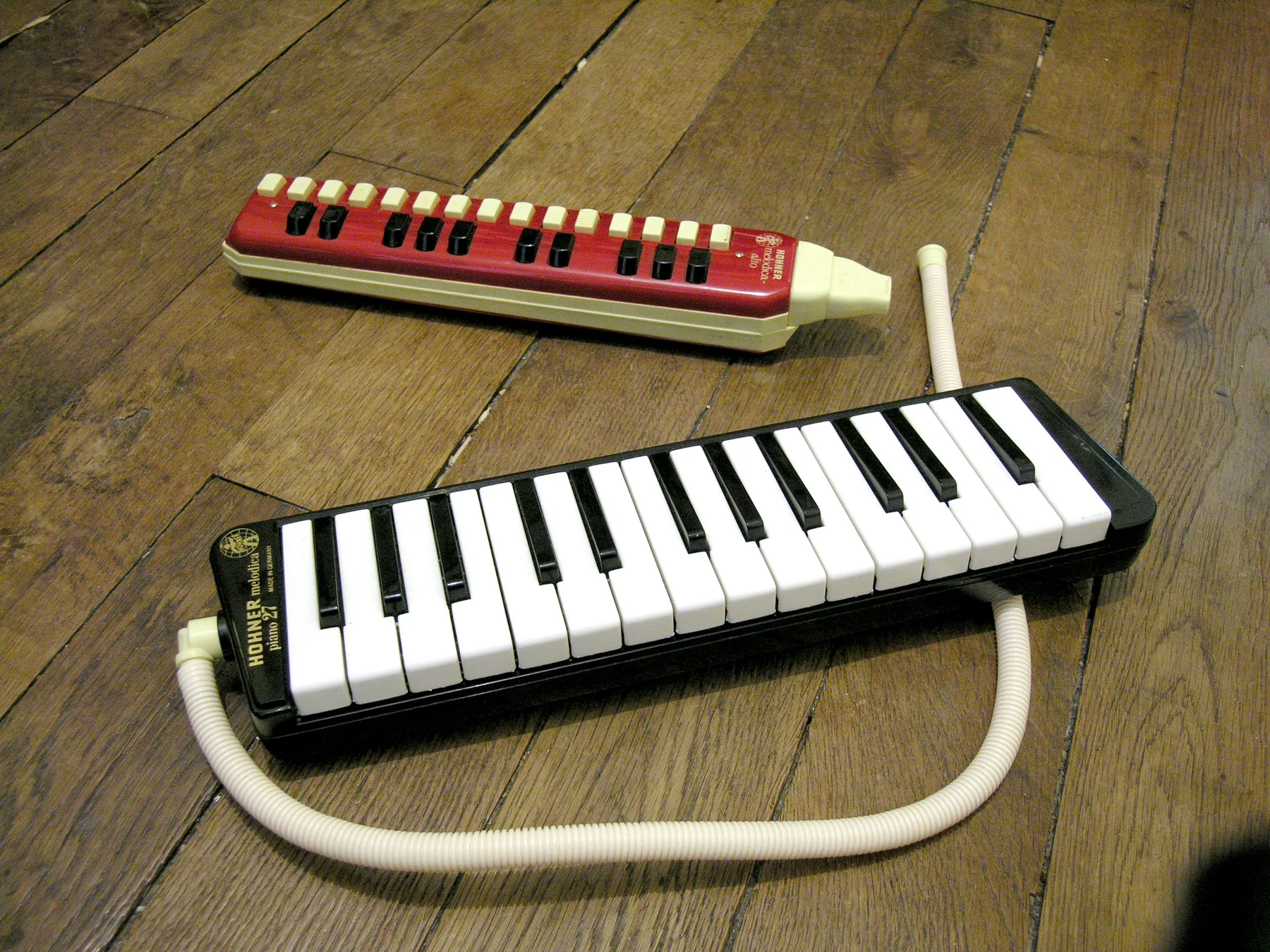
- Versatility: film music, rock, and orchestral arrangements.
- Expressiveness: air passes through the reeds, producing a sound reminiscent of the harmonica.
- On stage: mastery of the keys and two-handed playing offer tremendous artistic freedom.
“They brought this instrument to the attention of audiences on international stages and online.”
Conclusion
Ultimately, this instrument turns curiosity into real progress for any beginner. It provides quick access to the fundamentals of music while remaining fun to play.
The melodica serves as a bridge to the keyboard and the piano. Its design provides hands-on learning of notes, rhythm, and musical breathing.
Investing in this instrument encourages regular practice. It can be used on stage, in the studio, or in lessons. These instruments combine versatility with serious musical potential.
In short: this is not a toy, but a tool capable of transforming your everyday approach to music.