
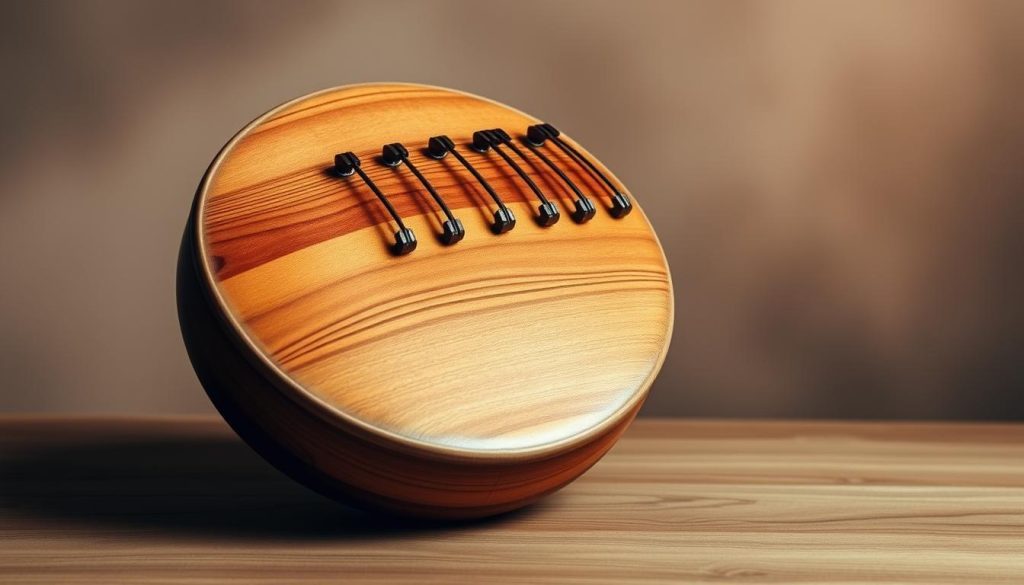
Are you passionate about music and looking to discover a unique and soothing musical instrument? This guide is for you! We offer a complete introduction to mastering the basics of the tongue drum, an ideal instrument for beginners.
Learning to play this instrument offers many benefits. Besides musical independence, it promotes relaxation and stimulates cognitive abilities, as demonstrated by Emmanuel Bigand of the CNRS. Whether you are a beginner or an experienced musician, this guide will support you step by step.
We will also discuss the available resources, such as books and online communities, to help you improve. Ready to explore the fascinating world of the tongue drum? Let’s begin this musical adventure together!
Introduction to the 11-note tongue drum
The tongue drum is appealing because of its simplicity and captivating sounds. This instrument, often made of steel, produces soft, harmonious tones that are ideal for relaxation or making music. It is particularly popular with beginners because it is easy to use.
What is a tongue drum?
The tongue drum is a percussion instrument made up of metal plates known as “tongues.” Each tongue produces a specific note when struck. Its ergonomic design makes it accessible even to people who have never played music.
Why choose an 11-note model?
An 11-note tongue drum offers the perfect balance between simplicity and an extensive repertoire. With this instrument, you can play more than 50 melodies, such as those featured in the Instruments du Monde book. Its standard tuning in C, D, or F major is perfectly suited to online tutorials.
Furthermore, its optimal size of 25 to 30 cm ensures a balanced sound that is neither too low nor too high. Recommended models include the 11-note Lekato and the Zenadrum, two popular choices among beginners.
Learning the tongue drum basics
Discover an instrument that combines simplicity with musical creativity. The tongue drum is designed to be accessible to everyone, even without any previous experience. Its unique design lets you produce harmonious sounds in just a few minutes.
How does a tongue drum work?
This instrument consists of metal tongues, each of which produces a specific note when struck. Its preset scales ensure that you cannot play a wrong note, making learning much easier. According to musiqueFacile.fr, “the learning curve is very gentle, making it ideal for beginners.”
Benefits for beginners
The tongue drum offers many advantages to people who are new to music:
- Fast progress, with audible results from the very first day.
- Affordability, with prices ranging from €100 to €400, unlike the handpan, which often costs more than €1,000.
- Excellent ease of use thanks to preset scales that allow you to play without worrying about wrong notes.
Gérard, a beginner, says: “I was surprised by the quality of the sounds and how quickly I was able to play my first melodies.”
To learn more about reading sheet music, see this complete guide.
Understanding tongue drum sheet music
Mastering sheet music is essential if you want to explore your instrument’s full potential. It guides you in creating harmonious melodies and helps structure your practice. Whether you are a beginner or an experienced musician, learning to read it is a key step.
Numbers and letters in sheet music
Sheet music for this instrument often uses numbers or letters to indicate the notes. Each symbol corresponds to a specific tongue, making the music much easier to read. For example, the number “1” may represent C, while “2” represents D.
To understand it better, here are a few key points:
- Reading direction: from left to right and from top to bottom.
- Dashes and extension lines indicate the duration of notes.
- Virtual metronomes help you keep time and maintain the rhythm.
How to read simple sheet music
Reading simple sheet music begins with identifying the symbols and matching them to the instrument’s tongues. One practical tip is to mark the notes on the instrument with stickers so that they are easier to recognize.
QR codes linked to tutorials, available with some sheet music, provide additional help. They direct you to an explanatory video, which is ideal for beginners. With a little practice, you will be able to play complete pieces in no time.
Types of tongue drum sheet music
Exploring sheet music for this instrument opens up a world of musical creativity. Whether you are a beginner or an experienced player, sheet music is available for every skill level. Find out how to choose the music that meets your needs.
Simple sheet music for beginners
Simple sheet music is ideal for people discovering this instrument. It uses numbers or letters to indicate the notes, making it easy to read. For example, a score may include measures, dynamics, and harmonics to guide the learning process.
The sheet music for Coldplay’s Hymn for the Weekend is one practical example. It allows you to play a familiar melody while becoming acquainted with the basics. A metronome or recorder can be useful while you practice.
Advanced sheet music incorporating music theory
For more experienced musicians, advanced sheet music incorporates concepts from music theory. It allows you to play complex pieces and develop a better understanding of music. These scores often include rests and precise tempos.
They also pave the way for improvisation and personal creativity. In time, you will be able to compose your own pieces and expand your repertoire.
Learning to play simple melodies
Playing simple melodies is an excellent way to get started with music. Whether you are a beginner or want to explore a new instrument, this step is essential for developing your skills. Begin with familiar tunes such as “Happy Birthday” to acquaint yourself with the basics.
The first steps in playing a melody
To play a melody, begin by locating the notes on your instrument. Each note corresponds to a specific tongue, making it easier to identify. Use simple sheet music, such as that available in this tutorial, to guide your practice.
Here are a few tips to get off to a good start:
- Read the notes one at a time—for example, 5-5-6-5-1-7 for “Happy Birthday.”
- Manage repetitions and rests to maintain the rhythm.
- Explore rhythmic variations from different cultures to enrich your playing.
Practical example: “Happy Birthday”
Take “Happy Birthday,” a universally familiar melody, as an example. The sheet music uses numbers to indicate the notes: 5-5-6-5-1-7. Play each note in rhythm and emphasize the repetitions to create harmony.
To assess yourself, record your playing with apps such as SoundCloud. This will help you identify areas for improvement and track your progress. With a little practice, you will quickly master this melody and be able to explore other tunes from around the world.
Where can you find tongue drum sheet music?
Finding the right sheet music is essential for expanding your musical repertoire. Whether you are a beginner or an experienced player, suitable resources are available to support your practice.
Free online resources
The internet is full of websites offering free sheet music. Platforms such as Beatroot and Instruments du Monde offer tutorials and downloadable PDF files. These resources are ideal for discovering new melodies without making an initial purchase.
Online forums and communities are also a gold mine. Users share their creations and tips, enriching the available selection. Be sure to read the comments to identify the most popular sheet music.
Books and sheet-music collections
For those who prefer physical media, books and collections are an excellent option. They offer superior print quality and practical organization. Some books even include explanatory videos to guide your learning.
Here is a comparison of the best books available:
| Title | Number of pieces | Price |
|---|---|---|
| The Complete Tongue Drum Guide | 50 | €29.99 |
| Sheet Music for Beginners | 30 | €19.99 |
| Set of 2 Books + Finger Protectors | 80 | €49.99 |
Physical editions often include extras such as stickers for identifying the notes. Amazon users highlight their practicality and quality.
Common mistakes to avoid
Learning a new instrument can sometimes be challenging, but the right advice makes everything easier. Recognizing common mistakes saves time and helps you improve more effectively. Here are some pitfalls to avoid and tips for staying motivated.
Pitfalls for beginners
When you are starting out, it is easy to fall into certain traps. For example, trying to master everything too quickly can lead to frustration. Gérard, an experienced user, recommends that you start slowly and focus on the basics. Another common mistake is failing to practice regularly.
Here are a few tips for avoiding these pitfalls:
- Use the 15-minutes-a-day method to maintain a routine.
- Keep a progress journal with SMART goals to measure your improvement.
- Join online jam sessions to connect with other musicians.
How to improve without becoming discouraged
Progress requires patience and a sound strategy. It is important not to become discouraged when you encounter difficulties. Gérard recommends setting realistic goals and celebrating every small success. Using gamified apps such as Yousician can make learning more enjoyable and motivating.
Here is a comparison of tools that can help you improve:
| Tool | Benefits | Cost |
|---|---|---|
| Yousician | Interactive, enjoyable learning | Free, with a premium version available |
| Progress journal | Personalized goal tracking | Free |
| Online jam sessions | Interaction and sharing with the community | Free or inexpensive |
Useful tongue drum accessories
To optimize your musical experience, it is essential to know which accessories are suitable. These tools improve not only the quality of your playing but also your comfort and the durability of your instrument. Discover the essential items for successful practice.
Mallets and how to use them
Mallets are sticks specially designed for striking the instrument’s tongues. They can produce softer or more powerful sounds depending on how they are used. Choose rubber or felt mallets for optimal results.
According to a specialist author, “felt mallets offer a warmer tone that is ideal for soothing melodies.” They are also recommended for beginners because they reduce the risk of damaging the instrument.
Finger protectors
Intensive practice can sometimes cause discomfort in the fingers. Special protectors are available to address this problem. Adhesive tape and medical-grade silicone are popular options for protecting your hands.
Here are a few tips for choosing the right protection:
- Choose hypoallergenic materials to avoid irritation.
- Use nail-reconstruction techniques to strengthen your nails.
- If you practice intensively, invest in a “Beginner” pack containing protectors and a learning method.
These accessories will allow you to play for longer while remaining comfortable.
Benefits of the tongue drum
The tongue drum is much more than a simple instrument: it offers surprising benefits for both body and mind. From improving memory to promoting relaxation, its benefits are numerous and varied.
Improving visual memory
Playing this instrument stimulates visual memory. By associating notes with precise positions, the brain develops stronger neural connections. This practice is particularly useful for children and adults who want to improve their concentration.
According to one study, “repeating musical patterns improves the ability to remember visual information.” This makes it an ideal educational tool for schools and rehabilitation centers.
Relaxation and well-being
The tongue drum is often used during sound-yoga sessions and sound baths. Its specific sound frequencies, such as 432 Hz, encourage relaxation and reduce stress. Compared with 440 Hz, this tuning is considered more soothing.
Here are a few popular therapeutic protocols:
- Combining it with Tibetan singing bowls for an immersive experience.
- Sessions lasting 20 to 30 minutes to reduce cortisol levels.
- Using it in guided meditation for a profound effect.
These practices are being adopted increasingly by wellness centers and spas. To learn more, read specialized articles about the subject.
Choosing the right tongue drum
Choosing the right instrument is a crucial step for getting started successfully. A model suited to your needs ensures an enjoyable and rewarding musical experience. Here are a few tips to help you make the best choice.
Selection criteria for beginners
Certain criteria are essential for beginners. Choose a model with standard tuning, such as C or D major, to make learning easier. The instrument’s size is also important: a diameter of 25 to 30 cm provides a balanced tone.
Here are a few points to consider:
- The quality of the materials: choose steel for greater durability.
- The number of notes: an 11-note model is ideal for beginners.
- Included accessories: a carrying case and learning method are valuable additions.
The best models for beginners
Among the recommended models, the Lekato and Zenadrum stand out for their quality and ease of use. These instruments are often praised in user comments for their soothing sound and ergonomic design.
Here is a comparison of the best models for 2024:
| Model | Number of notes | Price | Features |
|---|---|---|---|
| 11-note Lekato | 11 | €149 | Case included, tuned to C major |
| Zenadrum | 11 | €199 | Customizable design, rich sound |
| “Beginner” Pack | 11 | €249 | Learning method + finger protectors |
To try these models, visit stores such as Cultura or attend workshops run by instrument makers. Beware of counterfeits on Amazon: check reviews and make sure that sellers are certified.
Sharing and improving
Sharing your musical creations is a rewarding step for any musician. Whether you are a beginner or an experienced player, connecting with other enthusiasts helps you improve and discover new techniques. Online communities and digital tools offer unique opportunities to share and make progress.
Online communities and interaction
Online communities are ideal spaces for exchanging advice and resources. Platforms such as Reddit and specialist forums allow people to share sheet music, tutorials, and experiences. These interactions promote learning and motivation.
Here are a few benefits of online communities:
- Access to free and varied resources.
- The opportunity to receive constructive feedback on your creations.
- Meeting musicians who share your interests.
Sharing your own sheet music
Sharing your sheet music is an excellent way to contribute to the musical community. Free software such as MuseScore and Flat.io lets you create and publish your work easily. These tools meet professional publishing standards and ensure optimal quality.
Here is a guide to sharing your sheet music:
- Use Creative Commons licenses to protect your copyright while allowing others to use your work.
- Monetize your creations on platforms such as Etsy or Patreon.
- Read specialized articles to optimize the visibility of your sheet music.
For inspiration, here is a comparison of sheet-music creation tools:
| Software | Benefits | Cost |
|---|---|---|
| MuseScore | Intuitive interface, large community | Free |
| Flat.io | Real-time collaboration | Free, with a premium version available |
| Noteflight | Google Classroom integration | Free, with a premium version available |
Conclusion
Exploring a new musical world is a rewarding adventure. The tongue drum stands out for its simplicity and many benefits. Whether for relaxation, creativity, or learning, this musical instrument is an ideal choice for every skill level.
Do not become discouraged by difficulties. With practice and the right resources, you will make rapid progress. To help you, download our free guides and explore sheet music suited to your needs.
Join our online community to exchange advice, share your creations, and discover new techniques. For several years, enthusiasts from around the world have been gathering to celebrate this unique instrument. Begin your musical journey today!