
Choosing the right instrument for a young musician requires clear criteria to be considered. This article presents the essential factors to consider: quality, keys and mouthpiece.
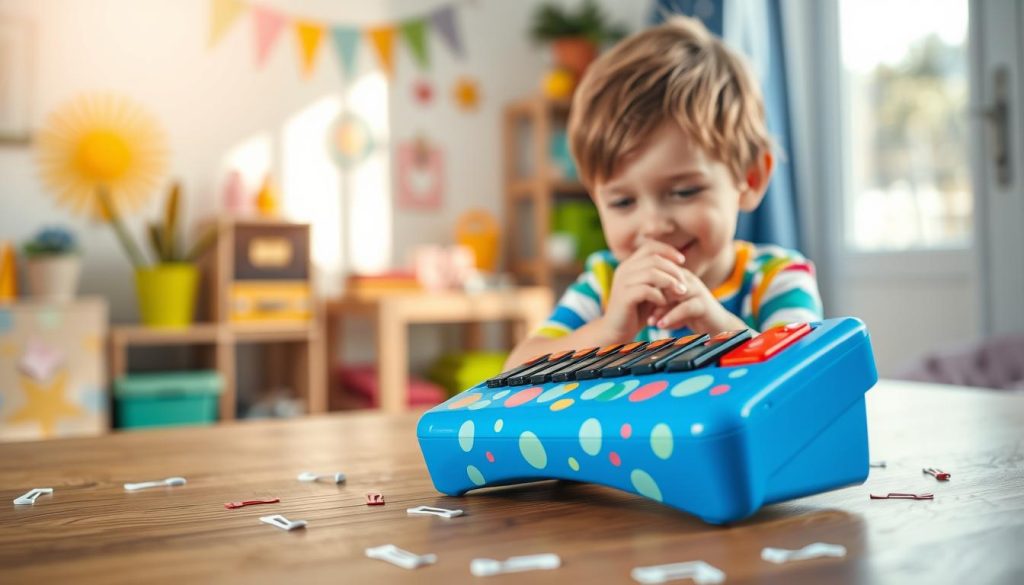
The melodica remains an excellent example of a musical instrument for introducing children to notes and the keyboard. Its ergonomic design makes it easy to handle and lets them explore sounds and reeds without difficulty.
We discuss the brand, range and price, as well as construction and technical criteria. We will also explain why certain models, such as those recommended by Hohner, are suitable for beginners.
Finally, this article will compare different brands and ranges to help you make your choice. You will find practical examples and a note about classroom use to guide your decision.
To learn more about the models and how they are used, see a complete presentation of Hohner ranges and models in the Hohner information sheet.
Why choose a melodica for your child’s early music education?
A portable instrument that is easy to handle turns the first lessons into enjoyable experiences. Regular practice improves memory and reasoning, as shown by a University of California study.
The benefits of playing an instrument
Playing music supports sensory awareness and brain development. It develops hand-eye coordination and patience during lessons.
Combining sounds and melodies also helps structure listening skills. This creates a solid foundation for later learning the piano, accordion or guitar.
An accessible and enjoyable instrument
Melodicas have keys that are easy to press and ranges suited to beginners. Affordable models are available, as are professional versions that sometimes cost several hundred euros.
The sound blends well with other instruments and makes it possible to play many pieces. For activity ideas and ways to explore sound, see this introduction to sound exploration or this educational account of initial classroom activities from Les Enfantlises.
- Advantage: compact and fun for children.
- Advantage: compatible with the piano and other instruments.
Children’s melodica: how to choose the right first instrument
Durability and key size often determine whether a student will progress quickly.
First, check that the casing is sturdy. Models such as the Hohner Student offer a good balance between build quality and price.
The number of keys affects the repertoire that can be played. A keyboard with more octaves makes it possible to tackle varied melodies and a wider range of notes.
Melodicas on the market cover several price ranges. Beginners can easily find a reliable brand without spending a fortune.
- Durability: useful for classroom use.
- Keys: choose enough octaves to play simple pieces.
- Keyboard: its quality promotes accuracy and musical progress.
“Comparing instruments according to their size and the player’s needs remains the best strategy.”
For a detailed presentation of the series and its features, see the Hohner Student information sheet.
The essential technical criteria for comfortable playing
Simple factors such as the number of keys and the quality of the reeds make all the difference.
The number of keys
Choose a keyboard with enough octaves to avoid limiting the repertoire.
The 37-key model is often recommended over the 32-key model.
The importance of the mouthpiece and tube
The mouthpiece and tube affect ergonomics.
A flexible tube and comfortable mouthpiece make it possible to play for long periods without fatigue.
They also encourage good posture in children and improve note accuracy.
Reed quality
The reeds, which use a system similar to that of an accordion, determine how well the sound is sustained.
Well-made reeds provide better intonation and a cleaner response.
- Construction: some brands offer superior quality and better tuning stability.
- Practice: a good technical balance helps beginners progress.
| Feature | Impact | Example |
|---|---|---|
| Keys (37 versus 32) | More octaves mean a broader repertoire | 37 keys recommended |
| Reeds | Sound accuracy and tuning stability | System similar to that of an accordion |
| Mouthpiece and tube | Comfort and playing posture | Flexible tube, ergonomic mouthpiece |
| Brand and construction | Durability and reliability | Suzuki (Hammond Melodion), Hohner Student |
“A good technical balance makes learning easier and sustains the desire to play.”
For range comparisons and advice based on price, see our guide to choosing according to budget and our overview of brands to explore the subject further.
Comparing ranges and brands for a successful purchase
To find the best value for money, compare ranges according to their intended use and your budget.
Compact models are suitable for travel. The Yamaha P25F, for example, has a very compact keyboard that is ideal for trips.
If playing quality is your priority, the Yamaha P32D offers two and a half octaves and holds its tuning well. It is a good choice for making progress.
The Suzuki M32C is popular with players seeking a warm tone. Its sound is reminiscent of a harmonica, while its careful construction adds to its appeal.
Choosing according to your budget
Limited budget: entry-level products cost between €30 and €75. They are suitable for trying the instrument and for occasional use.
High-end: above €150, sturdy and durable models become available, some of which sell for several hundred euros.
- Check the number of keys and the quality of the reeds.
- Compare brands such as Yamaha and Suzuki according to the type of sound you want.
- For a guide to the best value for money, visit our dedicated page: best value for money.
“Prioritize the number of keys and tuning stability for worry-free use.”
Conclusion
To conclude, let us focus on the criteria that encourage progress and enjoyment. This article has highlighted the essential factors for choosing a good instrument from the outset.
Playing music stimulates awareness and lets children quickly begin playing short pieces. The choice of keyboard and keys affects sound quality and the scope for improvement.
Prioritize durability and comfort during lessons. Melodicas offer children a simple and enjoyable solution, while parental support remains crucial.
For practical ideas and family-friendly advice, read these tips for introducing children to music.