

Start simply. This introduction presents the basics for successfully learning music with a wind instrument and keyboard. We take a practical, progressive approach to help you achieve quick results.
You will discover how to approach your first piece by following clear steps. The suggested methods encourage note reading, keyboard familiarity, and breath control.
Goal: turn curiosity into skill. By structuring your practice sessions, you can avoid common mistakes and strengthen your motivation from the very first days.
For an example of sheet music suited to first exercises and a simple range, see this piece written for a soloist with piano accompaniment: easy melodica sheet music for beginners.
Discovering the melodica for beginners
A hybrid instrument, the melodica combines breath and keyboard. It lets you learn to play melodies while intuitively absorbing music theory concepts.
To get off to a good start, adopt a structured learning method. Clear progression guides you step by step and prevents frustration.
Many teachers recommend working on breathing first. Controlled airflow produces a clear sound and makes your playing more fluid.
- A short, regular routine.
- Breathing exercises followed by finger-agility exercises.
- Varied resources: videos, simple sheet music, and local tutorials.
Learning requires patience and consistency. With the right tools, you can learn the melodica quickly and then progress to more advanced techniques.
Choosing your first instrument
Choosing a suitable instrument helps you progress without losing motivation.
Soprano and alto models
The Hohner Soprano (C 9451) has 25 keys. Its range extends from C4 to C6. This model emphasizes the upper register, making it ideal for clear melodies.
The Hohner Alto (C 9452) also has 25 keys. Its range is lower, from F3 to F5. It offers a warmer sound and is suitable if you prefer a lower register.
Differences between piano keys and buttons
The key layout affects how you play. A piano-style keyboard makes it easier to identify notes visually.
Button models require a different technique but can be more compact. Each key must be pressed accurately to ensure correct intonation.
“Choosing the right instrument makes learning easier and practice more productive.”
Quick summary:
| Model | Keys | Range | Advantage |
|---|---|---|---|
| Hohner Soprano (C 9451) | 25 keys | C4–C6 | Clear sound, upper register |
| Hohner Alto (C 9452) | 25 keys | F3–F5 | Lower, warmer sound |
| Layout | Keyboard / buttons | — | Affects playing and key accuracy |
Understanding range and the number of keys
An instrument’s range directly determines the available notes and the repertoire you can play.
Choosing the right number of keys prevents surprises when sight-reading a piece.
Why the number of keys matters for your repertoire
Each model covers a specific range. The Hohner Piano 26 (C 94563) offers 26 keys, from B3 to C6. That is enough for many simple tunes.
For a broader repertoire, the Hohner Piano 36 (C 9462) offers 36 keys and an extended range from F3 to E6. It lets you perform pieces that require more low and high notes.
The Hohner Student 32 (C 94324) is often recommended for beginners. With 32 keys, it covers a range from F to C3 and combines versatility with comfort.
“Understanding your instrument’s range prevents you from having to transpose or omit essential notes.”
- The number of keys determines the range and available notes.
- Choosing a suitable model ensures that every note in your favorite pieces can be played.
- Always check an instrument’s range before buying it to avoid limitations.
Finding easy melodica sheet music for beginners
Specialist websites offer accessible sheet music that respects the technical limits of small keyboards. These resources avoid overload and focus on the main melody.
Look for simplified versions that clearly show the rhythm and note values. Good sheet music includes tempo markings and easy-to-read rhythmic symbols.
Many websites offer free downloadable sheet music. Collections of method exercises and short pieces, for example, help you progress week after week.
- Choose clear, well-reviewed files.
- Check compatibility with a 32-key Hohner or an equivalent model.
- Vary the styles to broaden your repertoire.
To find free, practical resources, browse online sheet-music libraries such as free sheet music. They often provide arrangements suitable for early learning.
Mastering breathing and airflow
Controlled airflow turns a hesitant note into an expressive musical phrase.
Breath control is essential for producing a stable, consistent sound.
Managing air pressure lets you adjust tone and dynamics. Practice each note while observing the sensations in your chest and abdomen.
“Steady breathing maintains an even volume and reveals the melody’s expressiveness.”
- Practice without playing notes: blow steadily for an extended period and control the release of air.
- Do short, frequent sets to strengthen your lung capacity.
- Be patient: breath control develops day by day.
By focusing on smooth breathing, you will quickly notice improvements in sound quality and accuracy.
Positioning your hands on the keyboard
Placing your fingers correctly on the keyboard makes every musical passage easier.
Your hand should be relaxed and slightly raised. Keep your wrist flexible to prevent tension.
Your fingers should be slightly curved. This allows them to reach each key quickly and accurately.
- Correct hand position on the keyboard provides maximum ease of movement.
- A stable posture lets you cover more octaves without moving your entire arm.
- Exercises should be performed with a relaxed hand to develop flexibility.
By positioning your fingers correctly, you improve control and build endurance. These simple movements should be repeated regularly.
“Good hand position prevents tension and improves technique.”
Learning to read music notes
Decoding a staff allows you to anticipate the pitch and role of each note in a melodic line. It is an essential skill that makes reading and playing easier.
The staff and clefs
The staff consists of five lines. Each note is placed on a line or in a space. Clefs—treble or bass—define the pitch of each note on the staff.
Learn the basic positions by visually associating each note with its place. Repeat and say the note names aloud to memorize them quickly.
Note values
A note’s duration is indicated by its shape: whole note, half note, quarter note, and so on. This notation specifies how long to wait before playing the next note.
- Reading note values helps you follow the rhythm of the melodic line.
- Begin with slow exercises, then speed up while maintaining accurate note values.
- Once you understand the basics of reading music, every note becomes easy to locate and play.
“Regular reading practice allows you to sight-read any score with confidence.”
Decoding rhythm and tempo
Rhythm organizes each measure and brings the melody you play to life.
Tempo indicates the speed to follow. Always begin slowly so you can clearly feel each beat of the measure.
Use a metronome from your first practice sessions. It helps you maintain a steady tempo and strengthen your sense of rhythm.
- Divide each measure into smaller subdivisions to understand rhythmic divisions more clearly.
- Practice without playing first: count aloud, then play.
- Increase the speed gradually once the movement feels secure.
“Rhythm is the heartbeat of music; without it, the melody floats.”
By mastering tempo and rhythm, you will be able to play confidently with other musicians and in ensembles.
Basic exercises for the right hand
Targeted exercises quickly improve right-hand accuracy.
Start with short patterns. Practice scales at a slow tempo, then increase it gradually. These exercises strengthen dexterity and muscle memory.
Place each finger accurately on the key. Accurate placement is the foundation of confident playing.
- Play ascending and descending scales in quarter notes. Focus on the clarity of each note.
- Practice arpeggios with a metronome. This improves fluidity and clarity.
- Choose short, frequent repetitions: 10 minutes a day is better than an overly long session.
Repetition is the foundation of progress: it makes the right hand more responsive and the notes cleaner.
“Consistency turns movements into reflexes.”
For exercise ideas and simple melodies to practice, consult this useful resource: simple melodies.
Using the left hand on specific models
On some models, the left hand does more than provide support. It plays accompaniment notes or bass lines that reinforce the melody.
Understanding this foundation makes the transition to fuller playing easier. The left hand adds warmth and depth to the sound.
Develop coordination with simple exercises. Begin with slow scales in which the left hand plays sustained notes.
- Alternate between melody and bass to develop independent movement.
- Practice short patterns to strengthen muscle memory.
- Use a metronome to synchronize both hands.
Progress is quick if you practice briefly every day. Before long, the left hand will be able to play basic chords and independent rhythmic lines.
“Hand independence is the foundation that turns a simple melody into a complete arrangement.”
Playing your first simple melodies
Playing your first tunes is rewarding and tangible. It is the moment when technique becomes music.
Begin with short, familiar melodies. Practice each note slowly. Focus on accuracy and expression.
Each simple piece helps improve your fluency. By repeating it note by note, you build confidence and movement memory.
- Choose a tune you enjoy to stay motivated.
- Loop individual phrases, then connect them.
- Imitate performers such as Augustus Pablo to understand phrasing.
Tip: divide a piece into small sections and repeat them separately. This makes mastering the notes and tempo easier.
“A simple melody played well is more memorable than a major piece played poorly.”
To expand your repertoire of short pieces and find exercise ideas, browse this selection: 11 pieces for beginning piano players. You will find tunes suited to daily practice.
Adding chords to your playing
Adding chords immediately changes the color of a melody and enriches your playing.
To play chords, you must press several keys at the same time. This requires precise finger coordination.
Chords provide accompaniment. They support the melody and create harmonic transitions that strengthen the piece’s expression.
- Begin with simple triads (I, IV, V) and identify each note they contain.
- Practice inversions to minimize finger movement and maintain smooth accompaniment.
- Practice slowly with a metronome, then add dynamics to vary your playing.
“Mastering chords opens up new creative possibilities and makes every piece more complete.”
| Type | Structure | Use | Tip |
|---|---|---|---|
| Major triad | 1‑3‑5 | Direct melodic support | Play legato to connect phrases |
| Inversion | 3‑5‑1 or 5‑1‑3 | Smoother transitions | Reduce hand movement |
| Block chord | Simultaneous notes | Emphasizes rhythm and harmony | Vary the intensity to add color |
Resources for progressing quickly
Combining a structured manual with audio files transforms the learning process.
A specialized method book offers clear progression. It structures the exercises and provides concrete steps. Follow the lessons one by one to measure your progress.
Audio resources are essential. They train your ear and demonstrate the actual phrasing of each piece. Listen, then repeat while imitating the tone and nuances.
By combining a book with audio, you obtain a complete method. The manual provides the theory, while the audio files provide a model to reproduce.
- Choose a recent manual suited to beginner and intermediate levels.
- Download free recordings to work on rhythm and intonation.
- Vary your resources: video tutorials, written exercises, and listening tracks.
“A variety of resources lets you adapt the learning process to your own pace.”
Maintaining your instrument for better sound
Simple steps after every practice session preserve your instrument’s quality and reliability.
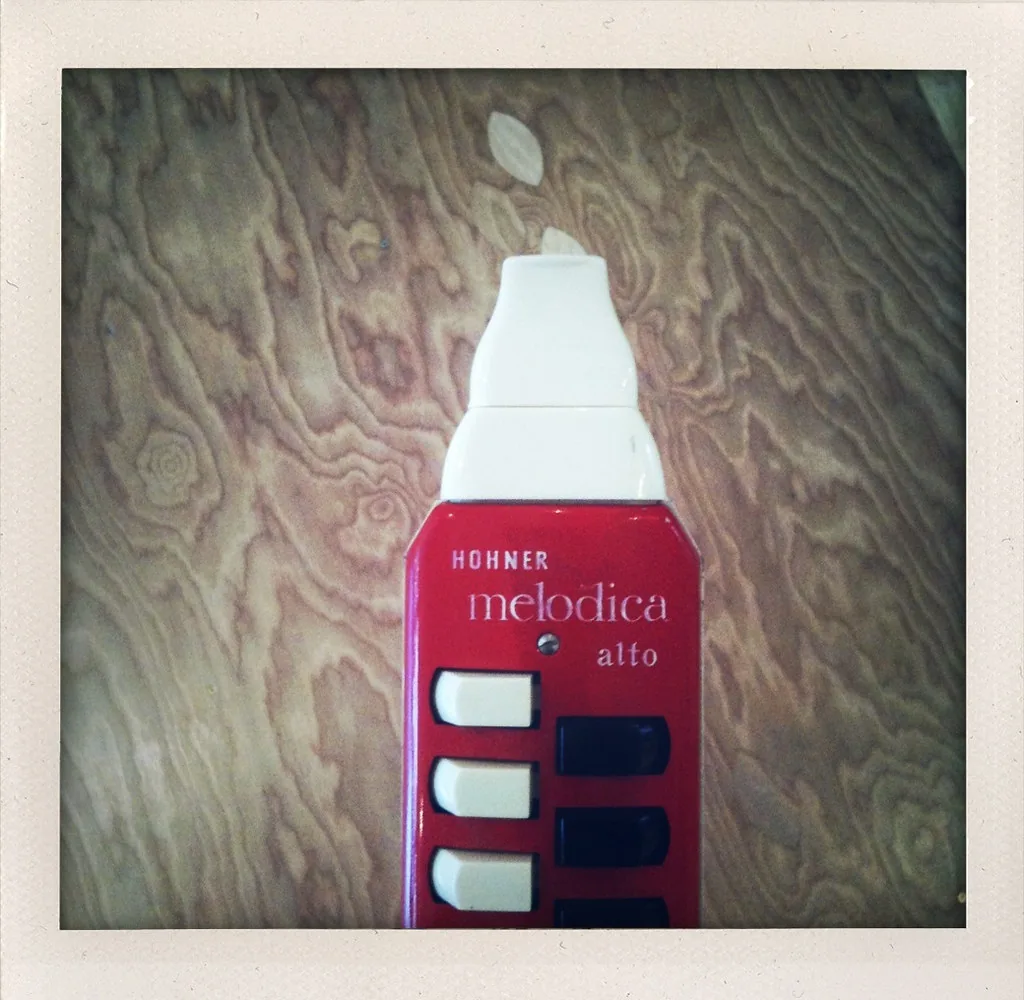
Remove moisture by blowing gently through the instrument after playing. This prevents internal corrosion and sound changes that impair audio quality.
Clean the keyboard and body with a dry or slightly damp cloth. Remove dust from between the keys to prevent sticking and maintain a precise response.
Regular checks: inspect the condition of mouthpieces, seals, and connectors where applicable. A well-maintained instrument provides better sound clarity in your personal audio recordings.
- Dry the instrument after use to remove moisture.
- Clean the surfaces and keys every week.
- Have it serviced by a technician if the sound changes or keys begin to stick.
Simple maintenance often prevents costly repairs and protects sound quality.
Tips for staying motivated every day
Motivation is the driving force. Set one simple goal whenever you sit down to play. A limited, specific goal makes the session useful and satisfying.
Record yourself regularly and listen to your progress. Comparing two takes recorded several weeks apart helps you recognize improvements and adjust your practice.
Practice a little each day instead of doing long, infrequent sessions. Consistency embeds muscle memory and makes every exercise feel more natural.
Vary the exercises and explore new styles. This sustains your interest in the instrument and prevents monotony.
- Set a limited goal each time (20 to 30 minutes).
- Make at least one audio recording every week.
- Celebrate small victories: a phrase played without mistakes deserves a reward.
“Visible progress, however small, inspires you to continue.”
Conclusion
The key to lasting progress lies in simple, focused habits.
By following this guide, you have gained the foundations needed to approach your instrument with confidence. Breathing, hand position, and music reading remain the pillars of your progress.
Practice in short sessions regularly and preserve the enjoyment of playing. Consistency turns movements into automatic habits and makes every piece feel more natural.
Continue exploring new sheet music and expanding your repertoire. These discoveries reveal the instrument’s rich sound and sustain motivation.
Good practice: set a simple goal for each session and record your progress. We wish you every musical success.