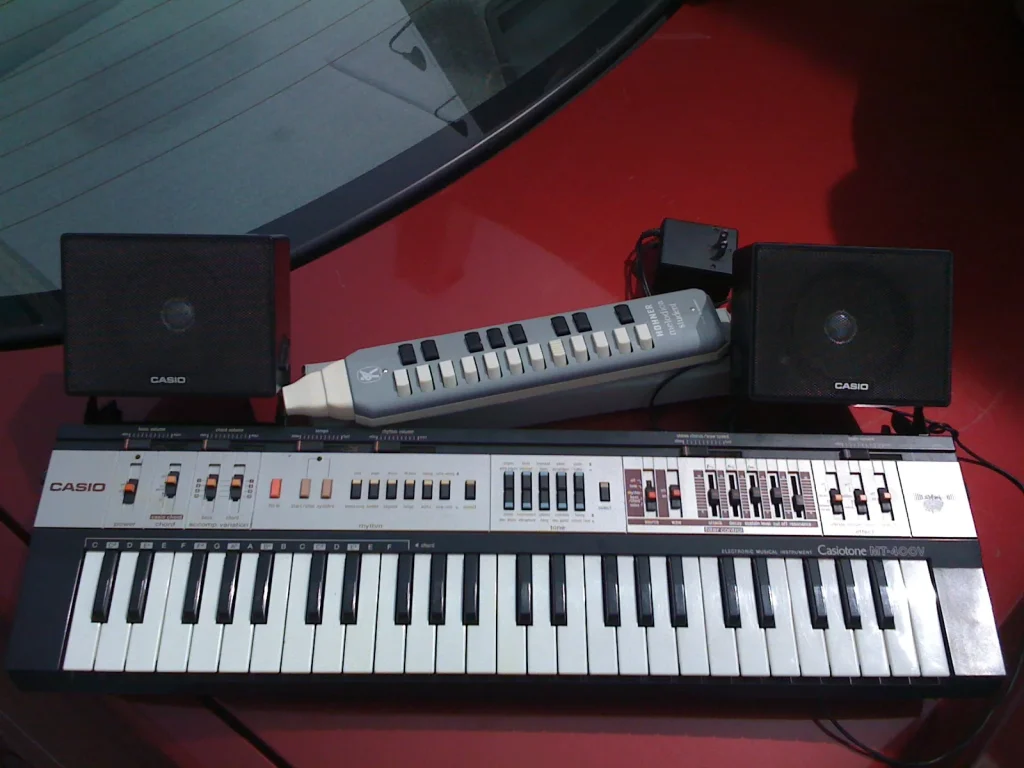
How to Choose a Melodica for Beginners

How to Choose a Melodica for Beginners

The melodica is a keyed wind instrument that combines the soul of an organ, a harmonica and an accordion.

Its portability and sound made their mark on the music of the 1970s and 1980s. This instrument remains ideal for beginners seeking a fun, portable first experience.

To make the right choice, you need to examine several criteria: reed quality, the number of keys, the model and the price. Brands such as Yamaha and Suzuki offer reliable melodicas for beginners.

The market offers melodicas ranging from entry-level to high-end. Learn about durability and sound quality before buying, and consult this practical guide for more details: detailed guide.

Understanding How the Melodica Works

The principle is simple: the instrument uses free reeds. When you blow and press a key, the reed vibrates and produces the note.

The keyboard layout follows that of a piano, making it easier to learn scales. Standard models often have a range of two octaves, which is sufficient for many pieces.

Posture matters: hold the mouthpiece behind your teeth without clenching it. The left hand supports the body while the right hand plays the melody. Keep your fingers relaxed for fluid playing.

Its similarity to the accordion and harmonica lies in the reeds. This mechanism produces a warm sound quality that has been appreciated since the 1970s.

“Blow, press, listen: three simple actions that turn air into music.”

  • Free-reed wind instrument.
  • Piano-inspired keyboard that makes reading notes easier.
  • Most models can be played with both hands.
Component Function Effect
Keys Activate the reeds Note control
Mouthpiece Supplies the air Airtightness and dynamics
Body Support and keyboard Playing ergonomics

To learn more and discover different models, consult this practical guide: a small portable piano.

How to Choose a Melodica for Beginners: The Essential Criteria

The note range and keyboard feel often determine long-term satisfaction. First, check the range: a 37-key model offers a wider range than a 25-key model and helps prevent you from running out of high notes.

Keys and keyboard: flat keys provide better rebound and respond quickly beneath the fingers. Rounded keys or buttons suit specific styles, but a flat keyboard remains the recommended choice for beginners.

Mouthpiece and sound quality: the mouthpiece must be comfortable because it affects breath control and note accuracy. Sound quality also depends on the brand; Yamaha and Suzuki often provide the best quality for beginners.

Budget and value for money: expect to spend between 20 and 100 euros on a first purchase. Higher-end models can cost as much as 500 euros. Choose an instrument supplied with a case to make it easier to carry and protect its body.

Beginner musician playing the melodica

  • Test how the keys respond beneath your fingers.
  • Choose 37 keys if you want a wider range.
  • Aim for good value for money to obtain better tuning stability.

To compare the options, consult our selection of the best melodicas.

Comparison of the Best Brands and Models for Learning

Beginner musicians and teachers recommend certain models for their robustness and tone.

The Market’s Essential Models

Yamaha Pianica P-37: 37 keys, approximately 2.5 octaves, excellent sound quality and solid construction.

Suzuki M-37C: 3 octaves, higher-quality reeds for precise response and greater durability.

“A good model should offer sufficient range and stable tuning.”

  • Hohner Performer 37: very good value for money and frequently used in schools.
  • Eastar: a practical entry-level option when budget is an important consideration.
Brand Keys Strengths
Yamaha 37 Sound quality, robust construction
Suzuki 37 Precise reeds, longevity
Hohner 37 Excellent value for money

Of course, the choice between 32 and 37 keys depends on the desired note range and how often the instrument will be transported. For a complete comparison of models and brands, consult our guide: model comparison.

Conclusion: Getting Off to a Good Start with Your New Instrument

Above all, enjoy playing. A suitable melodica encourages practice and quickly develops your musical ear.

Check the sound quality, the number of keys and the range in octaves. These factors directly affect your first notes and the gradual expansion of your range.

Compare models and brands according to price and durability. Beginners often find these instruments to be practical companions for exploring music.

By investing in good melodicas, you ensure durability and long-term enjoyment. Practise regularly and maintain your desire to play.

Keep reading  32- or 37-key melodica: which should you choose?

FAQ

What criteria should you examine when considering range and the number of keys?

The range affects the repertoire you can play. For beginners, a two-octave range (37 keys) is often sufficient. Models with 32 keys cover the basic range, while those with 37 or 44 keys provide a wider compass for playing with other instruments. Also check that the low notes do not sound muffled and that the high notes remain clear.

Does choosing a piano-style or compact keyboard affect how you play?

Yes. A piano-style keyboard offers a layout familiar to pianists and makes fingering easier to learn. Compact or narrow keyboards are better suited to small hands, but they reduce the comfort of playing with both hands. Choose a keyboard with responsive, well-spaced keys for better control.

What is the difference between a straight mouthpiece and a flexible tube?

A straight mouthpiece provides direct contact and a more powerful airflow, which is useful for articulation and dynamic control. A flexible tube offers more freedom when reading sheet music or playing with both hands, but the response may be less immediate. Some kits include both options, which is ideal for trying them out.

What materials and build quality ensure good durability?

Look for a body made from thick ABS plastic or high-quality resin, well-fitted reeds and mechanisms, and firmly joined parts without any looseness. Sturdy mouthpieces and reinforced tube connections reduce the risk of breakage. A hard or semi-rigid case protects the instrument during transport.

Can the reeds be replaced, and do they affect the sound?

Yes, reed quality determines the accuracy and tonal colour. Some models allow the reeds to be replaced or provide easy access to the reed block for maintenance. Better-calibrated reeds provide more stable intonation and better projection.

Which brand offers the best value for money for a beginner?

Hohner, Yamaha and Suzuki are recognised names. Hohner and Yamaha offer robust, affordable models. Suzuki often stands out for its superior sound quality. Compare the finish, the presence of a case and the included accessories to assess value for money.

Should you choose a model supplied with a case and accessories?

Yes. A case protects the instrument and extends its lifespan. Useful accessories include a flexible tube, an additional mouthpiece, a cleaning cloth and beginner sheet music. These items make practising easier and can justify a slightly higher purchase price.

What budget should you allow for a good first instrument?

Expect to spend between €40 and €120 on a good entry-level instrument with a case and accessories. Intermediate and professional models cost between €150 and €400, depending on the brand, range and reed quality. Do not buy the cheapest option if durability and sound matter to you.

Can all models be played with both hands?

In theory, yes, but comfort depends on the width of the keys and the instrument’s weight. Piano-style keyboards with standard-sized keys allow more natural left-hand and right-hand playing. Miniature or very compact models restrict hand positions and finger movement.

What maintenance is required to preserve good sound quality?

After every session, blow air through the instrument to remove moisture, dry its surfaces and store it in its case. Avoid prolonged exposure to humidity, and clean the tube and mouthpiece. If reed repairs are required, have the instrument serviced by a professional.

Are melodicas suitable for group performance or recording?

Yes, especially models with good projection and stable reeds. For live performance, use a microphone or contact pickup if one is available. In the studio, direct recording with a condenser microphone captures the instrument’s harmonic richness effectively. Choose a reliable model and test it before a concert.

Are there models suitable for children?

Yes. Some lightweight melodicas with smaller keys and a practical case are designed for small hands. Yamaha and Hohner offer durable, easy-to-use educational models. Check the size of the keys and whether a flexible tube is included to make good posture easier.

How can you check the intonation before buying?

Test every note across the entire range and listen to the attack, sustain and tuning. If possible, compare several examples of the same model, as individual instruments can vary. If you buy from a shop, ask to try a sealed model or one that has been inspected by the seller.

Leave a Comment

Your email address will not be published. Required fields are marked *