

In this article, we present a clear, practical comparison to help you choose a melodica suited to your needs in 2024.
The melodica is a small wind instrument prized for its portability and piano-like tone.
We assess durability, sound quality, and ease of transport.
Each selected model was tested using straightforward criteria.
Our goal is to help you make a relevant, long-lasting purchase, whether you are an amateur or a professional.
For gift ideas and useful accessories, also see our dedicated guide for musicians on quel-piano.
Read the rest of this article for detailed analyses and practical recommendations.
Understanding How a Melodica Works
Sound is produced when your breath activates the reeds, a simple principle that plays a decisive role in shaping the tone.
The Role of Breath and Reeds
This wind instrument works by directing air through metal reeds. These vibrating blades turn the air into notes through a mechanism similar to that of a harmonica or accordion.
The result: a warm sound whose intensity can be controlled with your breath. Popularized in the 1970s and 1980s, this system remains effective for modern musicians.
The Different Mouthpieces Available
You can use a rigid mouthpiece for greater precision or a flexible tube to play the piano-style keyboard with both hands. Your choice of mouthpiece affects both the resulting sound and playing comfort.
- One-handed playing: practical and direct for simple melodies.
- Two-handed playing: lets you explore scales and play richer accompaniments.
Best Melodica: Which Models Are Really Worth It?
On today’s market, a few models stand out for their value and ergonomics.
Hohner, which invented the instrument, remains a dependable choice. Its simple design and piano-style keyboard make learning easier. The sound can sometimes evoke an accordion or harmonica while retaining an identity of its own.
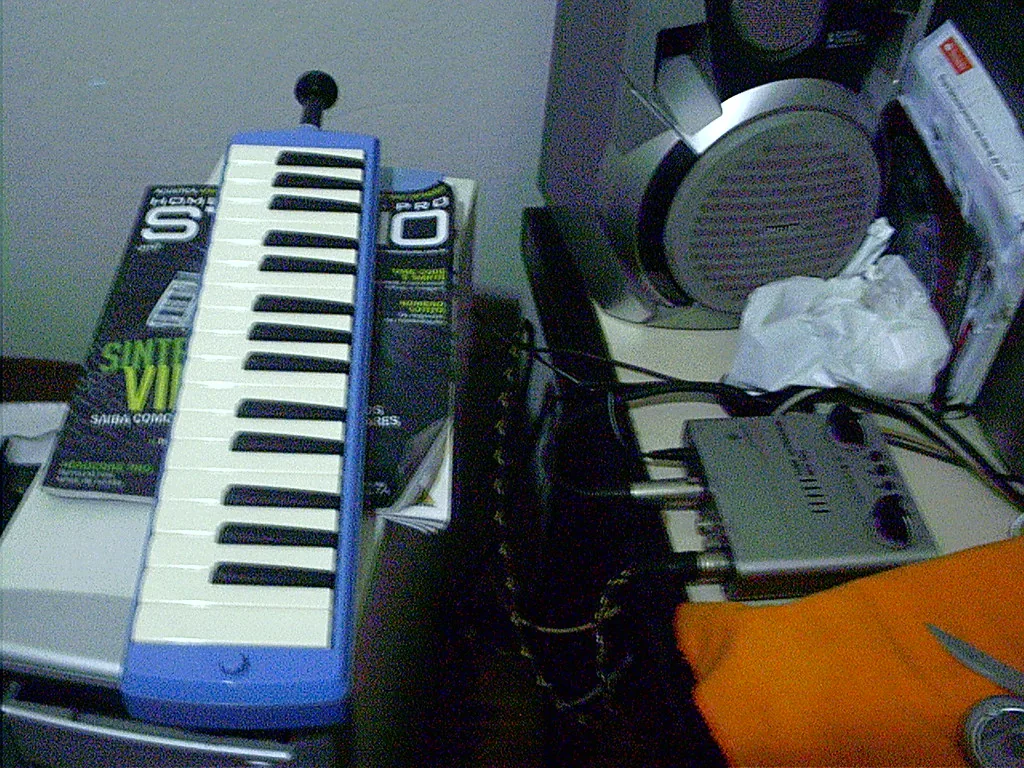
The Hohner Student 32 is often recommended for beginners on a tight budget. It supports two-handed playing and lets musicians explore scales inherited from the 1970s.
This melodica is easy to carry. It presents few logistical constraints and delivers a sound appreciated in rehearsals and live performances alike.
- Portability: lightweight and compact.
- Learning: a piano-style keyboard familiar to pianists.
- Sound: rich thanks to breath control and reeds.
| Model | Keys | Use | Strengths |
|---|---|---|---|
| Hohner Student 32 | 32 | Beginner / school | Affordable, durable |
| Portable model | 37 | Intermediate | Wider range, better tone |
| Professional amplified range | 37–44 | Stage / studio | Built-in microphone, precise tuning |
To read user feedback about the Hohner Student 32, follow our community link: Hohner Student 32 reviews.
Essential Criteria for Choosing the Right Instrument
A sound decision rests on three simple criteria: the available range, sound quality, and durability. These factors guide your choice according to your intended use, whether you are a beginner or a more advanced player.
The Importance of the Number of Keys
The number of keys determines the range of accessible notes. A 32-key keyboard offers a comfortable range for beginners and makes it possible to play varied pieces without undue limitations.
Also check the type of keys. Flat keys often provide better rebound for fast passages and improve playing comfort.
- Sound quality: linked to the instrument’s construction and reflected in its price.
- Brand: favor a reputable brand for greater durability and a lower risk of tuning problems.
- Budget: tailor your purchase to your needs: professional models offer wider ranges but cost more.
Why Choose the Market’s Major Brands?
Choosing a major brand often improves both the user experience and the durability of your instrument.
Hohner, which invented the melodica, illustrates this advantage well. Established manufacturers invest in research to improve reliability.
The result: more durable melodicas and better value for money for musicians of every level.
Buying a well-known model also helps ensure greater longevity. Resale is often easier, and maintenance is more accessible.
- Components optimized for good value for money.
- Testing and quality control across every range.
- After-sales service and spare parts available on the market.

| Advantage | Impact | Why It Is Useful |
|---|---|---|
| Research & development | Consistent sound quality | Greater precision and longevity |
| Quality control | Fewer tuning problems | Comfort for professionals and amateurs |
| After-sales service | Repairability | Higher resale value |
Analysis of Beginner Models
For beginners, choosing a simple instrument makes learning easier. The Hohner Student 32 combines a lightweight design with good ergonomics, helping you get started quickly.
Key specifications: it weighs 580 grams and measures 42 cm. Its 32-key keyboard makes it easy to learn the basic notes.
This model offers remarkable sound quality for its price. The Hohner brand delivers tuning stability and durability suited to first-time use.
This comparison shows that higher-performance models offer a wider range. Nevertheless, the Hohner Student 32 retains excellent value for beginners.

- 32 keys: ideal for first scales and exercises.
- Portability: lightweight and easy to carry to lessons.
- Value for money: durable without straining your budget.
| Feature | Specification | Advantage for Beginners |
|---|---|---|
| Weight | 580 g | Easy transport, less fatigue |
| Length | 42 cm | Comfortable handling |
| Keys | 32 | Accessible basic scales |
A Closer Look at Intermediate Instruments
The intermediate range brings together instruments designed to last while providing a better playing experience.
The Yamaha P37, sold for around €140, offers 2.5 octaves. Its clear sound quality and durable construction appeal to demanding musicians.
The Suzuki M-37C has 37 keys and covers three octaves. This range makes it easier to explore more varied registers and learn complex passages.
- These mid-range melodicas offer better value for money than entry-level models.
- Careful finishing and higher-quality reeds increase durability, even for occasional players.
- The choice between these more advanced models depends on the tone and note precision you want.
- Allowing a slightly larger budget will often secure a more reliable instrument over the long term.
In short, choose the brand and range that match your intended use and budget to make a worthwhile investment.
Professional and Amplified Melodicas
Amplified instruments provide a professional solution for stage and studio use. They combine an extended keyboard with components designed to ensure good stability.
The Benefits of a Built-In Microphone
Hammond Melodion PRO-44H V2: €555, 1.2 kg, built-in microphone. This model includes a dynamic microphone for direct amplification.
The microphone lets the musician connect to an amplifier without an external box. This simplifies sound checks and preserves the dynamics of the player’s breath.
“A built-in microphone improves tonal versatility in concert settings.”
Tuning Precision
Professional models use high-quality reeds. Their sound quality becomes more stable and accurate.
The 44-key keyboard provides a wide range of notes. Musicians can play complex passages with a touch resembling that of a piano.
- Versatility: direct amplification for the stage.
- Stability: premium reeds for lasting tuning.
- Use: ideal if your budget prioritizes live performance.
Care and Longevity Tips
Proper maintenance extends the life of your melodica and preserves its sound. After every session, drain accumulated moisture to prevent reed corrosion.
Handle the Hohner Student 32 carefully: remove the mouthpiece and let it air-dry. This prevents the reeds from becoming clogged over time.
Regularly clean the keys and mouthpiece with a soft cloth and lukewarm water. Avoid harsh solvents that could damage the finish.
Beginners should adopt these simple habits. The cost of proper maintenance is minimal compared with the cost of replacing the instrument.
- After every use: drain the moisture.
- Every week: wipe the keys and inspect the mouthpiece.
- Every year: inspect the reeds or consult a repair technician if necessary.
By caring for your melodicas, you preserve note accuracy and keyboard responsiveness. The result: greater playing enjoyment and years of trouble-free practice.
Conclusion
This overview highlights the essential criteria for investing in a durable, enjoyable instrument.
This comparison has presented different models for various budgets and uses.
Sound quality and durability remain the main priorities to keep in mind.
Also consider the price and maintenance requirements to preserve that quality over time.
Comparing prices and options helps prevent regrets.
We hope this article makes your decision easier and guides you toward a top choice suited to your needs. Make a considered purchase so you can enjoy your musical practice to the fullest.