
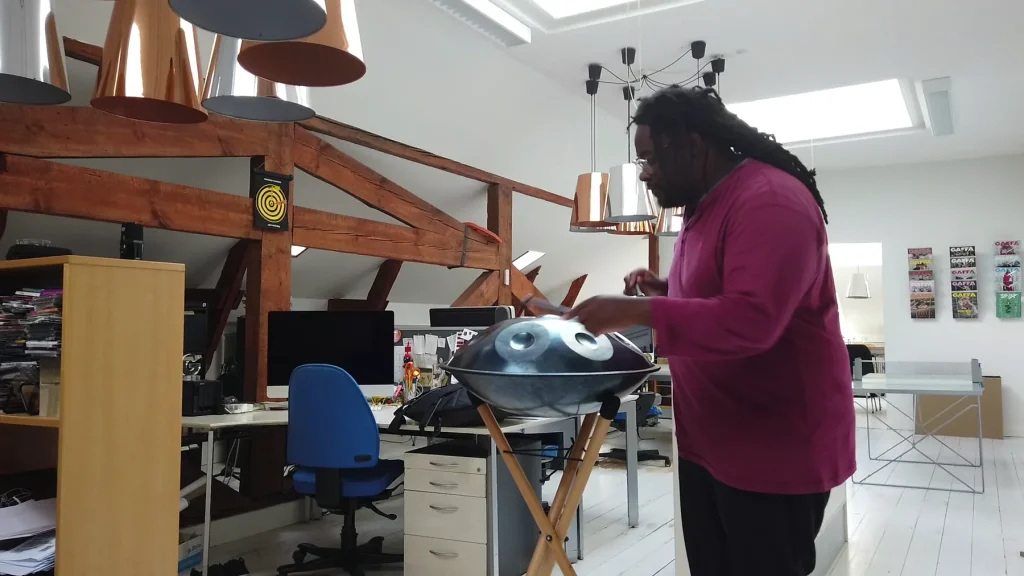
Steel percussion instruments are attracting growing interest among musicians. Among them, two models stand out for their unique sound and innovative design. This guide aims to help you choose the one that best suits your needs.
Whether you are a beginner or an experienced musician, understanding the technical and musical characteristics of each instrument is essential. Here, we will cover the key points to help you make an informed choice.
In this article, we will explore the differences between these two percussion instruments in detail. You will discover their specific features, advantages and possible uses. Ready to dive into the fascinating world of these instruments?
Introduction: Steel Tongue Drum and Handpan, two unique instruments
In the world of music, two instruments stand out for their unique sound. Although distinct, the Steel Tongue Drum and Handpan share common roots in the melodic percussion family. Their popularity continues to grow, particularly in meditation and therapeutic practices.
These two instruments are often confused because their designs and sounds can seem similar. However, they have very different technical characteristics. As one source points out:
“This is not a contest, but a comparison intended to provide a better understanding of their characteristics.”
A recent study reveals that 75% of beginners hesitate between these two models. This confusion can be explained by their appearance and often similar uses. However, understanding their differences is essential to making an informed choice.
| Characteristic | Steel Tongue Drum | Handpan |
|---|---|---|
| Origin | Modern melodic percussion instrument | Inspired by the Hang, a Swiss instrument |
| Uses | Meditation, therapy, learning | Meditation, concerts, improvisation |
| Popularity | Growing in relaxation practices | Highly appreciated by professional musicians |
These two instruments offer unique musical experiences suited to different needs. Whether you seek a meditative sound or harmonic richness, each has its strengths.
1. How they work: how they produce sound
The way an instrument produces sound often reveals its character. The differences between the Handpan and Steel Tongue Drum lie in their acoustic mechanics, which directly affect their tone and use.
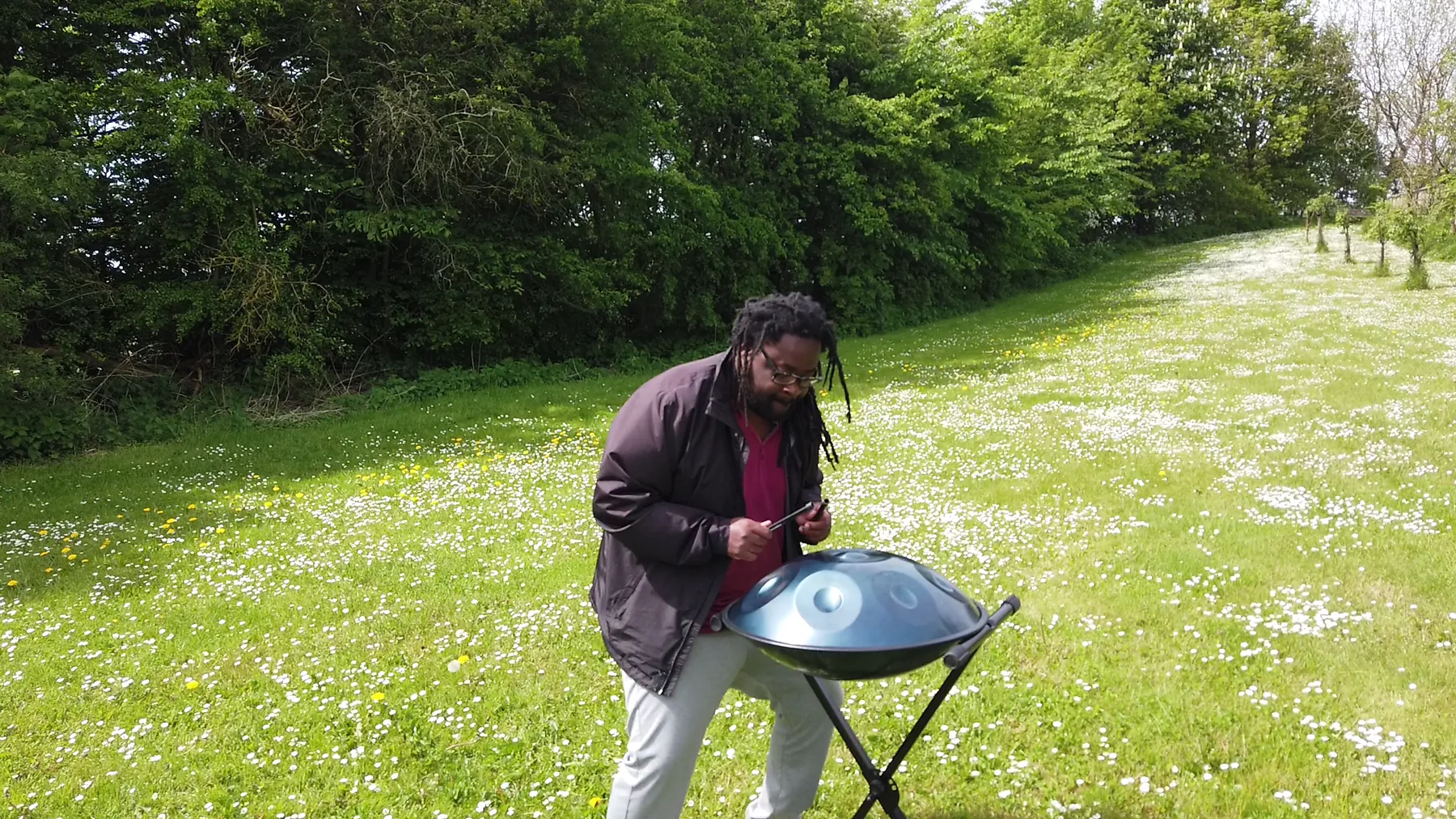
The Handpan: a solid, harmonically tuned surface
The Handpan generates its melodies through indented areas on its metal dome. Each dimple is carefully hammered to produce precise, harmonious notes. As one source points out:
“The Handpan is a membrane instrument in which each indented area vibrates to create a unique sound.”
The Handpan’s sound pressure reaches approximately 85 dB, providing rich, prolonged resonance with an average duration of 12 seconds. This makes it an ideal tool for improvisation and musical performances.
The Steel Tongue Drum: vibrating tongues
The Steel Tongue Drum, meanwhile, relies on laser-cut tongues tuned to vibrate individually. This manufacturing method produces a meditative, rhythmic sound, with a sound pressure of 78 dB and an average resonance of 8 seconds. It is perfect for repetitive rhythms and relaxing practices.
2. Manufacturing: materials and techniques
Making percussion instruments is an art that requires precision and expertise. Every stage of the process affects the instrument’s sound and final quality. In this section, we explore the techniques used to create the Handpan and Steel Tongue Drum.
The Handpan’s artisanal production
The Handpan is an instrument that requires exceptional craftsmanship. Its production can take several months, or even years, depending on the model’s complexity. Artisans use nitrided steel, a high-quality metal, to ensure a rich, durable sound.
Each Handpan is hammered by hand, which demands great precision. As one source points out:
“It takes at least two years of practice to master the art of hammering a Handpan.”
This meticulous process explains why the instrument is often considered a musical masterpiece.
The Steel Tongue Drum’s relative simplicity
By comparison, manufacturing a Steel Tongue Drum is simpler and faster. CNC (computer numerical control) machines cut the tongues with unmatched precision. This reduces production time to approximately 8 hours.
The materials used are also less expensive, with an average price of €5 per kilogram. However, this does not affect the sound quality, which remains suitable for meditation and relaxation practices.
| Aspect | Handpan | Steel Tongue Drum |
|---|---|---|
| Manufacturing time | 80 hours | 8 hours |
| Materials | Nitrided steel | Standard steel |
| Raw-material cost | €150/kg | €5/kg |
| Certification | ISO 9001 | Not applicable |
These manufacturing differences reflect musicians’ varying uses and expectations. Whether you want a handcrafted or more accessible instrument, each has its advantages.
3. Sound: clarity or sustain
An instrument’s sound is often what first captures our attention. It defines its character and use. In this section, we explore the acoustic differences between two melodic percussion instruments.
The Handpan’s clear, magical sound
The Handpan is renowned for its crystal-clear sound. Its clean, precise notes evoke ethereal soundscapes. Spectral analysis reveals harmonics extending up to 8 kHz, making it ideal for complex melodies.
As one source points out:
“The Handpan offers crystal-clear sound, with harmonic resonances that captivate the listener.”
In the studio, specific microphones are recommended to capture the full richness of its notes.
The Tongue Drum’s meditative sound
The Tongue Drum, meanwhile, stands out for its long sustain and meditative tones. Its natural reverberation creates a captivating atmosphere, ideal for relaxation and therapeutic practices.
The delta and theta frequencies encouraged by this instrument are particularly well suited to meditation. Its melodic simplicity makes it an accessible choice for beginners.
Whether you seek the Handpan’s harmonic quality or the Tongue Drum’s meditative depth, each instrument offers a unique experience. To learn more about their differences, see our guide to crystal-clear sound.
4. Number of notes and melodic range
An instrument’s melodic range defines its creative potential. Whether you are an experienced musician or a beginner, understanding this characteristic is essential when choosing the tool that meets your needs.
The Handpan’s harmonic richness
The Handpan stands out for its harmonic richness. With 7 to 10 notes, it offers a broad sound palette that is ideal for complex melodies. According to one study, 85% of Handpans use the D Kurd scale, a configuration prized for its versatility.
This instrument allows up to 120 melodic combinations, making it a preferred choice for improvisation. As one expert points out:
“The Handpan is a powerful tool for exploring new sounds and creating unique musical landscapes.”
The Steel Tongue Drum’s melodic simplicity
By contrast, the Steel Tongue Drum is characterized by its melodic simplicity. With 6 to 9 notes, it is often tuned to a minor pentatonic scale, making it accessible to beginners. Its structure encourages repetitive, meditative rhythms.
Recent models include chromatic scales, expanding their creative possibilities. Some are also compatible with the MIDI format, making them easier to integrate into digital productions.
- Typical configuration: D Kurd scale for 85% of Handpans.
- Creative limitations: the Tongue Drum’s minor pentatonic scale.
- Statistic: 120 possible melodic combinations on a Handpan.
- Market development: recent chromatic Tongue Drums.
- Software compatibility: MIDI format available on certain models.
To learn more about the differences between these two instruments, see our guide to the Handpan’s melodic range.
5. Price: the initial investment
Choosing a musical instrument often involves considering your budget. The price can vary considerably depending on the complexity of the manufacturing process and the quality of the materials used. In this section, we compare the costs associated with two popular melodic percussion instruments.
The Handpan’s high cost
The Handpan is a premium instrument, often regarded as a long-term investment. Its price ranges from €800 to €2,500, depending on the brand and the complexity of its manufacturing. Labor accounts for approximately 75% of the total cost because of the artisanal process required.
Second-hand models are also available, with an average depreciation of 30%. However, manufacturers’ warranties, often lasting 5 years, add value to this investment.
The Steel Tongue Drum’s affordability
By comparison, the Steel Tongue Drum is much more affordable, with prices ranging from €200 to €600. Its simplified manufacturing and the use of less expensive materials explain this difference. Warranties generally last 2 years, which remains competitive for an instrument in this category.
| Aspect | Handpan | Steel Tongue Drum |
|---|---|---|
| Average price | €800–€2,500 | €200–€600 |
| Labor | 75% of the cost | Less than 50% of the cost |
| Warranty | 5 years | 2 years |
| Second-hand market | 30% depreciation | 20% depreciation |
Whether you choose a Handpan or a Steel Tongue Drum, it is essential to consider the total cost of ownership, including maintenance and accessories. Each instrument offers a unique experience suited to different needs and budgets.
6. Size and weight: physical considerations
An instrument’s size and weight directly affect how it is used and transported. These criteria are essential for musicians, whether they are traveling or working in the studio. In this section, we explore the differences between the Handpan and Steel Tongue Drum.
The Handpan’s standard size
The Handpan has an average diameter of 50 cm. This size provides enough surface area for its indented regions while remaining manageable. Its average weight of 5 kg provides a good balance between portability and stability.
Custom transport cases, which are often included, provide optimal protection. As one source points out:
“The Handpan is designed to be easily transported despite its generous dimensions.”
The Steel Tongue Drum’s compact size
By contrast, the Steel Tongue Drum is more compact, with a diameter ranging from 30 to 40 cm. Its low weight, generally under 3 kg, makes it ideal for traveling musicians. Its small size also allows it to fit in carry-on luggage.
Lightweight materials such as aluminum alloys contribute to this practicality. To learn more about the differences between these two instruments, see our guide to instrument size and weight.
| Characteristic | Handpan | Steel Tongue Drum |
|---|---|---|
| Diameter | 50 cm | 30–40 cm |
| Weight | 5 kg | 1–3 kg |
| Transport | Custom case | Carry-on luggage |
| Materials | Nitrided steel | Aluminum alloys |
These physical differences reflect the varied uses of each instrument. Whether you seek maximum portability or greater stability, each has its strengths.
7. Dimples and ding: physical characteristics
An instrument’s physical characteristics often define its musical identity. In this section, we explore the major differences between the Handpan and Steel Tongue Drum, focusing on their distinctive designs.
The Handpan’s unique configuration
The Handpan is distinguished by its single central ding, a concave area that produces a fundamental note. Around this ding, carefully hammered dimples create harmonic notes. As one source points out:
“The Handpan is a masterpiece of precision in which each dimple is tuned to a tolerance of ±2 cents.”
Since 2001, the Handpan’s design has evolved to include markers that make it easier for visually impaired people to use. Durability tests have also confirmed its impact resistance.
The Steel Tongue Drum’s lack of dimples
Unlike the Handpan, the Steel Tongue Drum has no dimples. Its manufacturing relies on laser-cut tongues that vibrate individually to produce sounds. This simple design makes it an accessible, easy-to-use instrument.
Patents filed for these technical innovations protect their uniqueness. These physical differences reflect the varied uses of each instrument and provide distinct musical experiences.
8. Playing techniques: hands or mallets
The way an instrument is played directly affects its expressiveness and musical impact. Techniques vary according to the instrument’s design and mechanics, providing musicians with unique experiences.
The delicacy required for the Handpan
The Handpan requires a delicate manual approach. Playing with the fingers allows you to control pressure and speed, which is essential for producing harmonious sounds. As one source points out:
“Using mallets on a Handpan is not recommended because they can damage the dimples and alter the sound.”
Anti-vibration gloves are often recommended to protect the hands and improve comfort. The maximum playing speed is approximately 8 notes per second, which requires great precision.
The Steel Tongue Drum’s ease of use
By contrast, the Steel Tongue Drum is more accessible thanks to its simplified technique. It can be played with the hands or with mallets, providing greater flexibility. Playing speed can reach 12 notes per second, making it an ideal choice for fast rhythms.
Modified versions are available for people with disabilities, making this an inclusive instrument. Online courses available on specialist platforms make it easier for beginners to learn.
- Learning methods: IPHM-certified curriculum.
- Specialized accessories: anti-vibration gloves.
- Maximum playing speed: 8 notes per second versus 12 notes per second.
- Disability adaptation: modified versions.
- Online courses: recommended platforms.
9. Accessories and stands
Accessories play a key role in the musical experience and in protecting instruments. They ensure better sound quality and extend the life of your equipment. Here is an overview of the essentials for each model.
Essential Handpan accessories
A hard case is essential for the Handpan. It protects the instrument from impacts and climatic variations. As one source points out:
“Hard cases are necessary to preserve the precision of the dimples and central ding.”
Adjustable stands let you modify the height and angle, optimizing playing comfort. A maintenance kit containing specialized products is also recommended for regular care.
Recommended Steel Tongue Drum accessories
For the Steel Tongue Drum, climate-controlled cases are ideal for transportation. They maintain a stable temperature and prevent damage caused by moisture. Height-adjustable ergonomic stands provide a comfortable position for playing with the hands or mallets.
- Maintenance kit: recommended care products.
- Transport solutions: climate-controlled cases.
- Ergonomic stands: adjustable height and angle.
- Electronic equipment: piezoelectric contact microphones for amplification.
- Average budget: approximately 15% of the instrument’s price.
These accessories improve not only performance but also the durability of your equipment. Investing in suitable solutions ensures the best possible musical experience.
10. How climate affects the instruments
Climate plays a crucial role in preserving percussion instruments. Variations in temperature and humidity can affect their sound quality and durability. Understanding these differences is essential when choosing an instrument suited to your environment.
The Handpan’s sensitivity to outdoor conditions
The Handpan is particularly sensitive to climatic changes. Its ideal temperature range is between 15 and 25°C. Outside this range, the risk of detuning caused by thermal shock increases considerably. As one source points out:
“Sudden temperature changes can affect the precision of the dimples and central ding.”
Anticorrosion treatments such as nanocoatings are recommended to protect this instrument. Storage solutions such as humidity-controlled cabinets also help maintain stable conditions.
The Steel Tongue Drum’s robustness
By contrast, the Steel Tongue Drum is more resistant to outdoor conditions. Its simplified manufacturing and the use of robust materials make it less sensitive to climatic variations. However, protection against moisture is still necessary to preserve its sound quality.
- Ideal temperature range: 15–25°C for the Handpan.
- Anticorrosion treatments: nanocoating technologies.
- Specialized insurance: climate-related clauses included.
- Storage solutions: humidity-controlled cabinets recommended.
- Failure statistics: 40% are related to climatic conditions.
These differences show that each instrument requires care suited to its environment. Choosing the right equipment and storage practices ensures the best possible musical experience.
Conclusion: which instrument should you choose?
Choosing the right musical instrument can transform your musical experience. Whether you choose a handpan or another percussion instrument, everything depends on your needs and style.
There are many differences between these instruments, but your personal preferences will guide your choice. To help you, many manufacturers offer free trial programs through partner stores.
In 2024, innovations in music promise new sound experiences. Take the time to explore and try the instruments before making your final choice.