
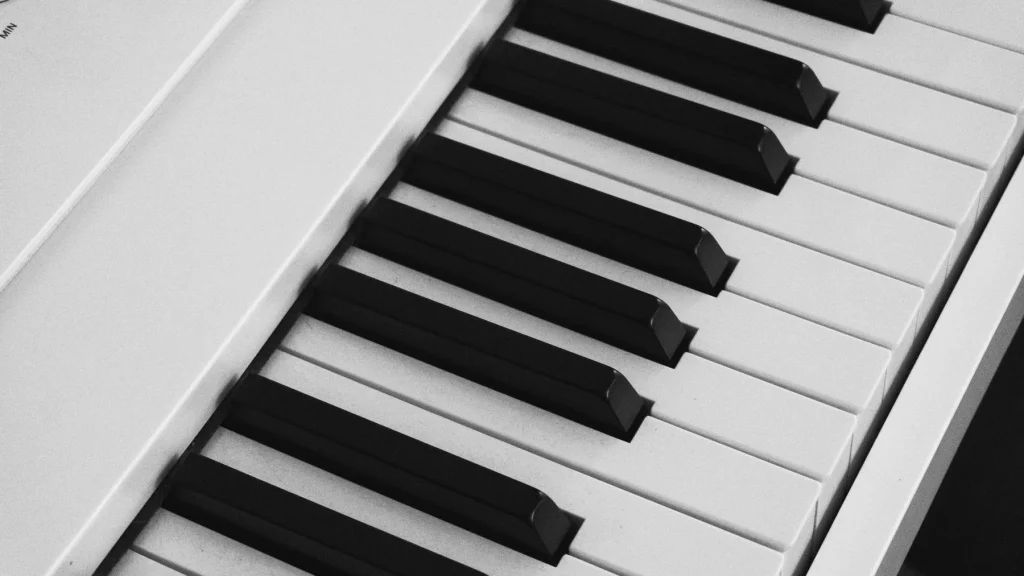
The melodica is a free-reed instrument that works like a harmonica and resembles a miniature piano. The Hohner brand popularized the instrument by officially naming it the “melodica.”
This guide provides a clear technical foundation for beginners. With just a few basic concepts, you will understand how to produce an expressive melody and accompany a simple song.
The method focuses on posture, breathing, and finding your way around the keys. With regular practice, you will quickly gain control and play your first notes with ease.
To go further, click here to access resources and advanced exercises. This guide is intended for musicians who want to progress with confidence.
Understanding How the Melodica Works
Exploring the mechanism helps you understand why each breath produces a specific note.
Free-Reed Mechanism
Sound is produced when air passes over a vibrating free reed. This design, similar to that of a harmonica, makes the production of notes highly responsive.
Each opening causes a specific reed to vibrate. The breath pressure therefore affects the attack and tone of the note.
Different Types of Models
Keyboard models have keys connected to valves. When you press a key, its valve opens an air passage so the corresponding reed can vibrate.
Button models are also available. These variants provide a simple foundation for beginners without unnecessary complexity.
- Benefit: clearly understanding the mechanism helps prevent unintended notes while playing.
- Tip: looking at an image of the keyboard helps you identify each key and its function.
Melodica Tutorial: The Basics for Fast Progress
The melodica has crossed musical genres, from reggae to soundtracks, thanks to masters such as Augustus Pablo.
Consistency and practice turn a simple song into a polished performance. Repeat short exercises several times a day to strengthen muscle memory and improve your initial speed.
Tempo provides the rhythmic foundation. Playing with a metronome helps maintain a steady speed and refine every melody.
The melodica suits jazz, pop, rock, and film music. This versatility makes learning easier and every practice session more motivating.
If you get stuck and your playing loses its melody, click here to discover tips and exercises that improve your melodic foundation with ease.
Choosing Your First Instrument
Choosing the right instrument makes learning easier and prevents frustration.
Why the Number of Keys Matters
The number of keys directly affects the range of notes available. Models range from 26 to 44 notes, or approximately 2 to 3.5 octaves.
A 32-key model is recommended for beginners. It ensures that you do not run out of notes when playing slightly more sophisticated pieces.
The instrument’s quality also affects the tuning of each note. A sound material foundation helps you develop a reliable ear from the very first weeks.
- Key choice: the number of keys determines the range and repertoire.
- Visualization: a comparative image shows the difference between 26 and 44 notes.
- Recommendation: 32 keys for a standard song and a solid learning foundation.
- Resource: click here to view a selection of instruments suitable for every level.
Adopting the Right Playing Posture
Holding the instrument properly reduces tension and improves accuracy.
The right hand rests lightly on the keyboard. It plays the notes, and the fingers should remain relaxed.
The left hand steadies the instrument. It prevents unwanted vibration and maintains balance during fast passages.
This posture provides an essential foundation. It prevents wrist pain and makes playing feel more natural.
- Position each finger ergonomically to make fingering easier.
- Keep your shoulders relaxed and your back straight for a solid foundation.
- Take care not to lose the melody through a lack of control: good posture helps you remain expressive.
- A melodic foundation without physical strain develops more quickly through simple movements.
| Element | Action | Result |
|---|---|---|
| Right hand | Relaxed movement over the keys | Accuracy and a clear attack |
| Left hand | Steady the instrument | Better balance |
| Fingering | Ergonomic positions | Smooth transitions |
Apply these tips regularly. Playing will become easier and more enjoyable.
Mastering Breathing and Breath Control
Precise breath control lets you shape every note intentionally. Playing depends on air and the proper use of the diaphragm to produce smooth, stable sounds.
Diaphragm Control
The diaphragm regulates airflow. Breathe in calmly, then blow while keeping your chest relaxed.
Practice long, slow phrases. This trains the diaphragm to maintain a consistent balance between pressure and volume.
Using the Mouthpiece
There are two types of mouthpiece: a direct mouthpiece and a tube. The direct mouthpiece provides greater precision. The tube allows more freedom of movement for the hands.
Adjust how you deliver the air according to the mouthpiece you choose. This prevents your playing from losing its melody and improves note duration.
“Tonguing is essential for articulation; it separates notes without breaking the phrasing.”
- Breath is the foundation of sound production.
- Tonguing promotes rhythmic clarity and a strong melodic foundation.
- A clear image of how the breath and diaphragm work together speeds up progress.
| Technique | Action | Effect |
|---|---|---|
| Diaphragm | Controlled, steady breath | Stable notes and a smooth tone |
| Direct mouthpiece | Fixed mouth position | Accuracy and a crisp attack |
| Tube mouthpiece | Freedom of movement for the hands | Comfort and accompaniment playing |
To learn more about circular breathing and related exercises, read this in-depth article.
Learning to Use the Keyboard
Keyboard accuracy comes from careful fingering and a well-trained right hand.
The right hand operates the keyboard: each key corresponds to a specific note. Practice slowly to identify each note and memorize the scale.
Hand coordination lets you add rich chords. The left hand steadies the instrument and can support the right hand during a piece or song.
Good fingering reduces mistakes and lets you play one note after another without hesitation. Practice short, repeated exercises to establish the movement’s foundation.
“Visually locating notes on the keyboard accelerates motor memory and frees your creativity.”
- Tip: a fingering image helps you place each finger on the appropriate key.
- Goal: learn to play notes accurately and give a melody greater depth.
- Resource: click here to access interactive exercises that reinforce keyboard memory.
Developing Hand Coordination
Developing finger independence lets you perform rich accompaniments without losing the melodic line.
Finger Independence
Begin with slow exercises. Practice one hand at a time, then combine them. The right hand carries the melody while the other supports the harmony.
Using the blowing tube frees both hands. This promotes more accurate keyboard fingering and better control of the keys.
- Coordination requires regular practice: repeat these exercises several times a week.
- Finger independence helps you play distinct notes while maintaining a steady accompaniment.
- A clear image of finger placement improves speed and accuracy during performance.
- Click here to discover tempo exercises and synchronize your hands.
“Coordination is the foundation that lets you play every note with confidence.”
Practicing Articulation and Rhythm
Mastering articulation changes the color of a melody. Alternate between staccato and legato to vary your expression.
Practicing tonguing remains essential: it lets you shape the rhythm of every note and rest. Repeat slow exercises, then increase your initial speed once the movement is stable.
The right balance between the breath, diaphragm, and mouthpiece ensures a steady tempo. An even breath provides a solid rhythmic foundation throughout the piece.
- The right hand must learn to play one note after another with precise fingering on the keyboard and the correct key.
- Daily tonguing practice improves speed and clarity.
- Include rests: they shape the music and make melodies more vibrant.
“One clean tongue stroke is better than a burst of poorly controlled air.”
To go further and discover the next step in your learning, follow structured sessions that strengthen the relationship between breath, diaphragm, and mouthpiece.
Reading Sheet Music for Melodica
Sheet music reveals the arrangement of notes and rests step by step. It turns symbols into a language of music that your hand can follow. Reading music makes it easier to learn a piece and makes every note clearer.
Locate the staff, then identify the notes and rests. Understanding where to place your finger helps you follow the melody without hesitation. Visual recognition improves fingering and coordination.
Reading is an essential foundation for playing confidently. It lets you decode every note and the rhythmic structure. With sheet music, you can practice passages slowly before increasing the tempo.
- Reading sheet music provides a foundation that helps you decode every note and the piece’s rhythmic structure.
- An image of sheet music displays the notes and rests and makes it easier to learn the melody with your right hand.
- Click here to hear melody audio that guides you through your first scores.
- Mastering sheet music enables you to play note by note with accuracy and musicality. It strengthens your fingers, fingering, and memory.
“Reading music opens the door to a broader repertoire and a variety of pieces.”
Maintaining Your Instrument Every Day
Simple, regular maintenance keeps the notes clear and the instrument reliable.
Store your instrument in a dry place away from dust and moisture. Ideally, lay it flat in its case. Storing it this way protects the internal mechanisms and prevents premature wear.
Wipe the exterior with a soft cloth after every session. This preserves its appearance and prevents dust from affecting sound quality. It is a basic way to keep the instrument from unintentionally losing its melody.
Periodically wash the mouthpieces in warm, soapy water. They must be cleaned carefully to prevent bacteria from accumulating. This creates a healthy, durable melodic foundation for every song you play.
- Regular maintenance: ensures that notes remain accurate and stable.
- Cleaning the mouthpieces: prevents germs and maintains note clarity.
- Storage: protects against moisture and preserves the mechanical foundation.
- Wiping: prevents dust buildup that can distort notes and rests.
| Action | Frequency | Effect |
|---|---|---|
| Store flat in a dry place | After every use | Protects the mechanisms |
| Wipe the exterior | After every session | Preserves appearance and sound |
| Clean the mouthpieces | Every week or as needed | Good hygiene and a healthy melodic foundation |
Performing a Deep Clean
Once or twice a year, a deep clean removes embedded dirt and internal condensation. This procedure restores an even response and extends the instrument’s life.
Disassembly Precautions
Before opening the instrument, consult the manufacturer’s instructions. Screws and clips must be handled with suitable tools to avoid damage.
The internal parts are fragile. Work on a clean surface and keep track of every component so you can reassemble the instrument correctly.
- Deep maintenance: provides a foundation for disinfecting the mechanisms and removing condensation.
- Internal components must be handled carefully to preserve the instrument’s melodic foundation.
- A detailed image makes disassembly easier and reduces the risk of playing without a melody after reassembly.
- Click here for advice about antiseptic products and cleaning the air passages to remove residue that interferes with rests and note projection.
- This cleaning provides a foundation that guarantees a clear sound for every note you play.
If in doubt, entrust the procedure to a technician. Proper maintenance preserves your instrument’s tuning and melodic foundation.
Choosing Your Learning Method
A suitable learning method turns every session into visible progress. Your choice depends on your level, available time, and preferred way of learning.
Private lessons provide complete personalization. A teacher can correct your fingering, every note, and every melody. We recommend taking lessons if you want individualized feedback.
Video tutorials on specialist websites are also very useful. They demonstrate hand movements and explain sheet music step by step. The accompanying melody audio helps you understand the phrasing and interpretation of a piece.
Choosing a motivating method provides an important foundation. The way you learn music affects your rate of progress and the quality of every song you play.
“A good method emphasizes notes, listening, and regular practice.”
- Adapt the method to your level.
- Choose live feedback whenever possible to correct mistakes.
- Use audio and sheet music to understand each piece more clearly.
Overcoming Early Difficulties
The first year can seem demanding. Technical obstacles are common when you encounter new musical elements. Rest assured: perseverance turns these obstacles into progress.
We recommend following a short but regular practice routine. Work with a metronome to stabilize the tempo and improve your initial speed. A rhythmic reference helps prevent your exercises from losing their melody.
Tonguing is central. Once mastered, it lets you articulate every note and incorporate new elements into your melodic foundation. Take the time to practice this movement separately.
- Hold short sessions several times a day to strengthen your fingering.
- Practice the relationship between breath, diaphragm, and mouthpiece to stabilize the sound.
- Persevere: every repetition turns a difficulty into a skill.
“Patience and rhythm are the keys to making it through the first year.”
| Problem | Action | Result |
|---|---|---|
| Unsteady tempo | Practice with a metronome | Stable tempo |
| Unclear articulation | Tonguing exercises | Crisp attack |
| Uneven breath | Breathing, diaphragm, and mouthpiece exercises | Sustained, controlled notes |
For tips on coordinating the breath, diaphragm, and mouthpiece, along with practical exercises, click here.
Expanding Your Musical Repertoire
Expanding your repertoire opens the door to new musical inspiration.
Begin by adding one piece from each style. Reggae, jazz, pop, and rock offer different colors. These melodies help you hear each note and vary your attacks.
Listening to melody audio provides an effective foundation. Repeat the music while following the track to incorporate new musical elements into your practice.
Participating in events such as the Melodica Festival in Cologne, New York, Hamburg, Sydney, or Melbourne encourages interaction. You will discover arrangements and new elements that enrich your playing.
- Expanding your repertoire provides a foundation for exploring a variety of musical elements.
- Every song or piece you add strengthens your understanding of notes and phrasing.
- A diversity of styles accelerates progress and nurtures your personal expression.
“Exploring different styles helps you develop your own style and reveal new emotions.”
To prepare for what comes next, discover the next step suited to your level.
Taking Part in the Musician Community
Sharing your practice with other musicians turns every rehearsal into an opportunity to learn.
The Melodica Festival brings together artists from different backgrounds. These gatherings encourage the exchange of ideas and the creation of lasting connections between players.
Local and online communities remain valuable resources. They offer advice, sheet music, and feedback on your playing.
- Taking part in the community provides a foundation that enriches your learning and nurtures your passion.
- We recommend following local events to meet enthusiasts and try techniques in person.
- Click here to join specialist forums and share your progress with other musicians.
- The community provides practical advice and support that accelerate your learning.
| Action | Benefit | Frequency |
|---|---|---|
| Attend a festival | Networking and masterclasses | Annually or occasionally |
| Join a forum | Sharing sheet music and feedback | Weekly |
| Group sessions | Collective practice and inspiration | Monthly |
“Interacting with other musicians stimulates creativity and encourages perseverance.”
Conclusion
Conclusion
Learning this instrument offers a simple, rewarding path into music. By following the principles in this guide, you will lay the foundations for effective practice.
Consistency and curiosity remain your best allies. Practice short exercises, listen carefully, and adapt your sessions according to your progress.
Over time, your melody will gain clarity and expression. Share your pieces, join the community, and continue exploring this unique world of sound.