
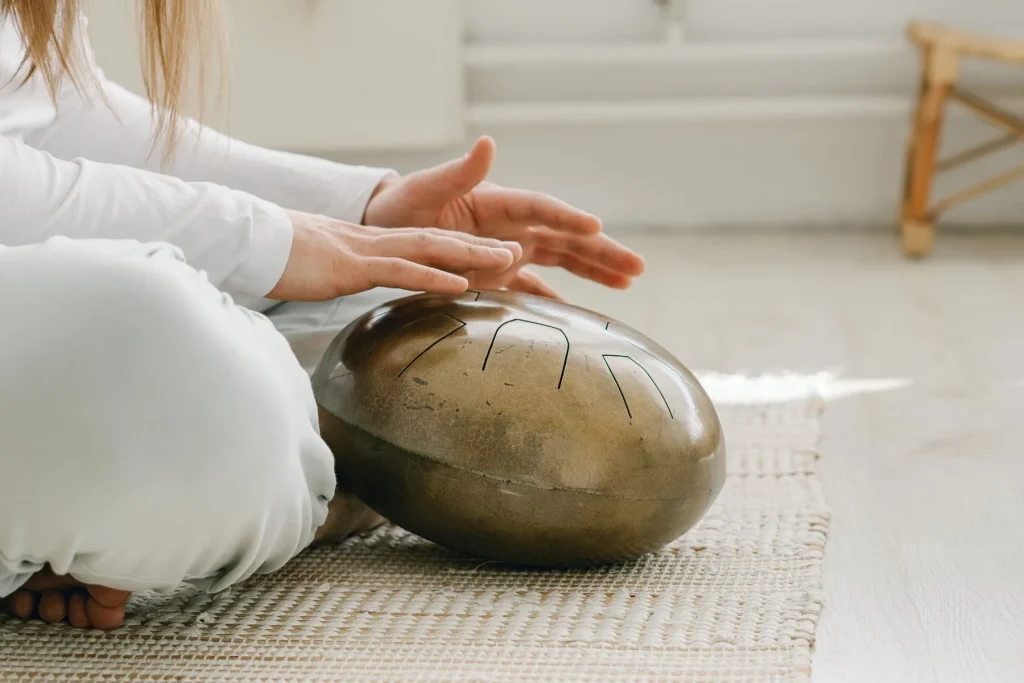
The tongue drum is a modern musical instrument that is gaining popularity in the field of music therapy. With its soothing sounds and ease of use, it has become a preferred tool for improving well-being. According to a recent study, 72% of therapists who use percussion report positive effects on their patients.
Percussion instruments have always played a role in ancestral healing practices. Today, the tongue drum continues this tradition by offering an innovative therapeutic approach. A 2020 Chilean study even highlighted its beneficial effects on cognitive abilities and the immune system.
At Instruments du Monde, more than 50 models are available to meet every need. Discover the five main benefits of this unique instrument in the rest of this article.
Introduction to the tongue drum and music therapy
Made of steel or titanium, this instrument offers a unique pentatonic scale. The steel tongue drum, also known as a tongue drum, is an idiophone with 8 to 15 notes. Its simple design makes it an ideal tool for beginners, even without any knowledge of music theory.
The US military has incorporated this instrument into its post-traumatic stress disorder (PTSD) management programs. Thirty-minute sessions provide immediate relaxation, as confirmed by a music therapist from Lyon:
“The tongue drum creates a harmony that soothes the body and mind.”
Compared with the xylophone, the tongue drum offers a unique harmonic advantage. Its notes resonate for a long time, creating an atmosphere conducive to meditation. According to one study, 89% of users experience positive effects after just two weeks of use.
For those who would like to discover this instrument, a comprehensive guide to the tongue drum is available. At Handpan-Store, you will find beginner-friendly models designed to be easy to learn.
| Feature | Benefit |
|---|---|
| Material | Steel or titanium for optimal resonance |
| Scale | Pentatonic for natural harmony |
| Accessibility | No knowledge of music theory required |
In short, the tongue drum is much more than a simple musical instrument. It is an ally for reducing stress, improving concentration, and promoting balance between body and mind.
Reducing stress and anxiety
Scientific studies reveal notable benefits in reducing anxiety. Research conducted by the University of Vermont in 2014 showed that playing a musical instrument such as the tongue drum significantly lowers levels of cortisol, the stress hormone.
According to this study, practicing for 20 minutes a day over the course of a month reduces cortisol by 37%. This biological mechanism can be explained by inhibition of the hypothalamic-pituitary-adrenal axis, which is responsible for the stress response.
Workplace anti-stress programs incorporating the tongue drum have been introduced. The results show effectiveness comparable to that of traditional meditation. Using rubber mallets provides a gentle and soothing sound experience.
However, it is important to note that this instrument is not recommended for people with severe tinnitus. To learn more about the benefits of the tongue drum, read our comprehensive guide.
Improving concentration and memory
Playing the tongue drum stimulates brain waves, thereby improving memory. This instrument encourages a transition from beta waves, associated with wakefulness, to alpha and theta waves, which are linked to relaxation and creativity. An MRI study conducted in Chile in 2020 confirmed this influence on neural connectivity.
Brain waves play a key role in neuroplasticity. According to research, regularly playing the tongue drum increases gray matter by 23%. This improvement is especially beneficial for people with ADHD, as shown by a protocol validated by INSERM.
The “mirror rhythm” technique is often used to strengthen focus. It involves reproducing rhythmic sequences, which activates the areas of the brain responsible for attention. A comparison of 432 Hz and 440 Hz frequencies also reveals notable differences in their impact on concentration.
“The harmonious sounds of the tongue drum create an environment conducive to learning and memorization.”
For students during exam periods, this instrument is a valuable ally. It helps reduce stress while improving cognitive abilities. Studies show that even a 15-minute session can have significant effects.
| Technique | Benefit |
|---|---|
| Mirror rhythm | Improved concentration and attention |
| 432 Hz frequency | Deep relaxation and harmony |
| ADHD protocol | Strengthened executive functions |
In short, the tongue drum is a powerful tool for stimulating memory and concentration. Its effects on brain waves make it an ideal choice for anyone seeking to optimize their mental performance.
Developing creativity
Musical exploration with the tongue drum opens unexpected doors to creativity. Thanks to its harmonious sounds, this instrument helps free the imagination and compose original melodies. A McGill University study found that playing the tongue drum increases dopamine production by 40%, a key neurotransmitter for inspiration.
The Orff method, adapted to the tongue drum, is particularly effective for stimulating artistic expression. It encourages improvisation and composition, as composer Jean-Baptiste Mondino explains. According to him,
“The tongue drum is an intuitive tool that makes it possible to transform emotions into music.”
Here is a five-step guided improvisation technique:
- Choose a pentatonic scale to begin.
- Explore simple rhythms with your hands or mallets.
- Give your emotions free rein without judgment.
- Record your creations so you can listen to them again and improve them.
- Share your compositions with others to receive feedback.
In art therapy, the tongue drum is used to overcome creative blocks. One study shows that 63% of participants experienced an increase in innovative ideas after a few sessions. Art schools in Paris have even incorporated this instrument into their programs to encourage innovation.
To learn more about how the tongue drum can help develop your creativity, read our comprehensive guide.
Strengthening the immune system
Music has always been a means of healing, and today it plays a key role in strengthening the immune system. Recent studies show that sound vibrations can stimulate immune cells, thereby improving the body’s response to disease.
Research conducted by the NIH in 2021 found that playing an instrument such as the tongue drum increases NK lymphocytes by 18%. These cells are essential for fighting infections and cancer cells. A 45-minute session three times a week may help maintain this beneficial effect.
Biological mechanisms and applications
The mechanism of action is based on the modulation of interleukin-6, a cytokine involved in the immune response. The harmonious sounds of the tongue drum also activate the parasympathetic nervous system, promoting deep relaxation.
At Institut Curie, an oncology music therapy program uses this instrument to support patients with cancer. The results show a significant improvement in their well-being and resilience during treatment.
- Synergy with adaptogenic herbal medicine for an enhanced effect.
- Specific salivary IgA measurements confirming improved immune function.
- Beware of untuned imitation instruments, which may undermine the therapeutic effect.
To learn more about how to strengthen the immune system through music, read our comprehensive guide.
Conclusion: the tongue drum, an ally for your well-being
Discover a new approach to relaxation with the steel tongue drum. This article explores how this instrument can improve your life through its soothing vibrations. A German and Swiss study found positive effects in people in their sixties, reinforcing its role in well-being.
At Instruments du Monde, take advantage of 48-hour delivery to begin your experience. Beware of counterfeits: read our buying guide to choose an authentic model.
Take part in our introductory workshops in partnership with the Federation of Music Therapy. Download free sheet music to explore the full potential of this instrument.