
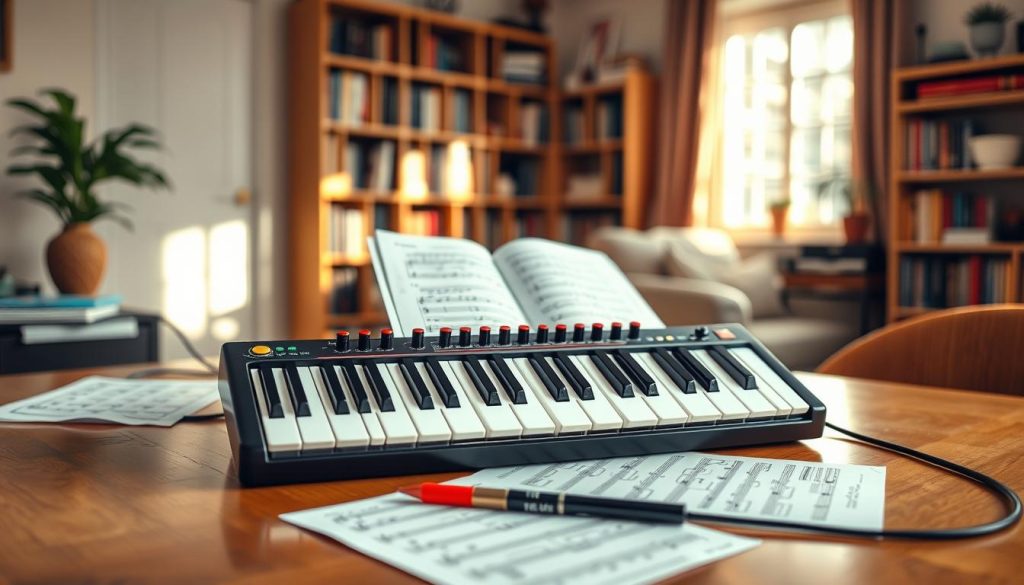
Choosing the right instrument requires clear criteria. This guide examines why this model remains popular with many musicians in France. It focuses on durability, range, and keyboard responsiveness.
Since September 2, 2015, several accounts have confirmed intensive use in concerts and outdoors over a number of years. This feedback shows that the quality of the materials has a direct impact on longevity.
Its quick learning curve makes it easier for beginners and experienced musicians alike to practice scales. Its ability to produce a clear sound during rehearsals or in a car makes this a versatile instrument for everyday use.
This initial overview presents the key points for assessing key responsiveness, resistance to wear, and suitability for long sessions. Read on for a complete guide and practical advice.
Understanding how the melodica works
What makes this instrument distinctive is its combination of a keyboard and blown air. This hybrid design makes it accessible to play while still requiring breath control.
A cross between an accordion and a harmonica
It combines the layout of a piano keyboard with the breathing technique used for the harmonica. The keyboard makes it possible to play chords as on a piano.
This design also resembles the accordion in its ability to produce several notes simultaneously.
The vibrating-reed mechanism
When the player blows, the air activates internal reeds. These reeds produce clear notes and a rich sound.
The internal design optimizes note stability. As a result, every key delivers a consistent tone.
- A piano-inspired keyboard for accurate chords.
- A reed mechanism similar to that of the harmonica and accordion.
- Requires breath control, making it a rewarding wind instrument.
| Feature | How it works | Impact on the musician |
|---|---|---|
| Keyboard | Piano layout | Makes it possible to play chords and melodies accurately |
| Reeds | Internal vibrating reeds | Produce clear, stable notes |
| Breath | Airflow control | Requires technique and provides dynamic nuance |
To learn more about choosing a suitable model, see our practical guide to choosing a melodica for beginners.
37-key melodica: advantages and disadvantages
An all-black design looks appealing on stage, but it can make finding notes more difficult for some musicians.
The Thomann 37 Pro Melodica Black is comfortable to handle thanks to its carefully considered design. However, its dark appearance can sometimes make the ends of the keys hard to distinguish, creating a genuine problem in concert.
The included mouthpiece improves playing comfort and makes it possible to play for long periods without fatigue. Its quality also affects the clarity of the sound produced during performances.
- Attractive, professional design, but low visual contrast.
- Ergonomically designed for a comfortable hold.
- Check the finish on the ends of the keys before buying.
To compare other models and properly weigh appearance against readability, see our guide to the best models: best melodicas.
Essential criteria for choosing the right instrument
The durability of the materials directly affects the lifespan of your instrument.
First, check the build quality. Good construction ensures stable resonance and a pleasant feel.
Build quality and materials
The brand often matters when it comes to reliable construction. Established manufacturers use robust reeds and components that withstand impacts better.
- Quality: ensures better resonance and greater longevity.
- Range: choose the range suited to your musical practice.
- Design: opt for an instrument that is easy to maintain.
- Value for money: high quality rarely comes cheaply; check the materials.
A well-built instrument helps you progress faster. It also delivers a consistent sound, note after note.
Why choose the Hohner brand
Choosing Hohner means relying on extensive manufacturing experience and consistent quality.
The Hohner brand created the modern melodica. Its historic models remain dependable choices for musicians in France.
Among its best-known models, the Hohner Student is an ideal entry point for beginners. Its case can be converted into a music stand, making practice easier.
For musicians seeking performance, the Hohner Superforce delivers professional sound and dependable performance on stage. The Hohner AirBoard Rasta stands out for its design and distinctive mouthpiece.
- Proven construction ensures excellent sound quality.
- Dedicated accessories: tubes, mouthpieces, and cases suited to each use.
- A Hohner melodica retains its value and playing comfort over the long term.
Analysis of entry-level models
Entry-level models provide an affordable way to find out whether this instrument appeals to you.
The Startone Melody 32 remains the least expensive option. It lets you learn without making a major investment.
Value for money in beginner models
The Thomann Pro Melodica offers very good value for beginners. The brand also offers versions called Thomann Pro, allowing players to try the instrument before investing in a better model.
Some models include a case. This accessory protects them during travel and extends their lifespan.
The limitations of budget instruments
The build may have flaws at the ends of the keys. This affects both their appearance and note accuracy.
Entry-level models often have 32 keys. This limitation reduces the playable range for complex pieces.
Overall, these models are a very good starting point. They are suitable if you understand their limitations in construction and design.
| Model | Strength | Limitation | Recommended for |
|---|---|---|---|
| Startone Melody 32 | Very low price | 32 keys, basic finish | Trying it out, tight budget |
| Thomann Pro Melodica | Balanced value for money | Less premium materials than Hohner | Motivated beginner |
| Hohner Student | Superior build quality | Higher price | Serious learning, long-term use |
A closer look at mid-range instruments
For intermediate musicians, balancing performance and price becomes central to choosing an instrument.
The Walther Melodica Black is often cited as offering the best value for money. This model has a more refined build than entry-level models. The brand thus offers melodicas suited to regular practice.
The note range remains stable on these models. Their sound performance is consistent, which helps when working on more demanding pieces.
- Build quality: durable materials and more responsive keys.
- Value for money: a very good balance between price and performance.
- Practicality: some instruments need to be placed on a table to be played comfortably.
Choosing a mid-range instrument is a sensible investment. It allows you to progress without immediately moving up to professional equipment.
| Strength | Impact | Recommended for |
|---|---|---|
| Refined construction | Durability and consistent sound | Intermediate musicians |
| Good value for money | Performance without excessive added cost | Regular practice |
| Stable notes | Serious work on pieces | Study and rehearsals |
High-end options for experienced musicians
For stage and studio use, some instruments incorporate an amplification system for immediate sound output. These models are built for performance. They combine power, ergonomics, and durability.
The benefits of built-in amplification
The Hammond Melodion PRO-44H V2 is a good example of this category. This instrument has a built-in microphone that provides reliable amplification for professional concerts.
Its design includes 44 keys and therefore provides an extended range suitable for complex repertoire. The keyboard remains responsive, which is essential for fast passages.
Thanks to its active system, its sound is richer than that of models such as the Hohner Superforce. The microphone captures the nuances of the performance, improving the live mix.
Its appearance and design reflect superior quality. The ergonomic mouthpiece provides lasting comfort. Despite the high price, intensive use and durability often justify the investment.
- Strength: built-in amplification for the stage.
- Comparison: the Thomann Pro Melodica does not offer the same active features.
- Advice: prioritize quality if you play for long periods and perform concerts regularly.
The importance of range and number of keys
The number of keys greatly influences the repertoire you can play. On standard models, the range generally extends from F to F3, providing ample scope for everyday playing.
An instrument’s range is determined by its keyboard: the longer it is, the wider the range of notes. This makes it easier to perform complex pieces without transposing them.
The price often varies with this range. Models with a wider range generally cost more because they require more materials and precision.
With large melodicas, it is common to rest the instrument on a table for comfortable playing. The piano-inspired layout also helps those already familiar with that instrument.
“Choosing the right range means choosing creative freedom for your compositions.”
- Versatility: an extended range lets you explore more notes and chords.
- Practicality: a table may be needed to play comfortably.
- Quality: accurate notes ensure correct intonation across the entire range.
| Criterion | Impact | Advice |
|---|---|---|
| Number of keys | Range | Choose according to your intended repertoire |
| Piano keyboard | Ease of learning | Ideal if you play the piano |
| Price | Varies according to range | Set your budget according to your intended use |
Tips for maintaining your melodica and extending its life
Spending a few minutes on maintenance after each session prevents many technical problems. Regular maintenance preserves good sound quality over many years of use.
How to use the moisture-release button
The moisture-release button allows accumulated condensation to drain after each use. The method: hold down the button and blow hard to expel the water.
Repeat until no more droplets emerge. This limits reed oxidation and preserves note accuracy.
Drying after use
Always dry the instrument after draining it. Leave it open in a dry, well-ventilated place for at least an hour.
Regularly clean the mouthpiece with soapy water to maintain impeccable hygiene. A clean instrument produces a clearer, more stable sound.
- Frequency: clean after every session and dry daily if used regularly.
- Equipment: soft cloth, lukewarm water, mild soap.
- Goal: protect the internal mechanism and extend its lifespan.
| Action | When | Result |
|---|---|---|
| Use the moisture-release button | After every use | Drains condensation |
| Dry thoroughly | Immediately after cleaning | Prevents reed oxidation |
| Clean the mouthpiece | Every week or after lending it | Good hygiene and clear sound |
Essential accessories for getting the most from your playing
The right accessories transform a simple instrument into a dependable companion for stage use and travel.
A sturdy case protects the instrument from impacts and dust while traveling. On some models, it can also serve as a music stand, improving comfort during rehearsals.
Keep a spare mouthpiece on hand to avoid interruptions if the original is damaged. Having several mouthpieces helps you adapt your playing position depending on whether you are standing or sitting.
Flexible tubes are convenient but fragile. Replace them regularly to maintain a good seal. Accessories remain modestly priced compared with a quality instrument.
Investing in compatible, durable accessories extends the life of your equipment and improves everyday playing comfort.
| Accessory | Use | Advice |
|---|---|---|
| Hard case | Protection from impacts and dust | Choose a model compatible with the instrument |
| Spare mouthpieces | Uninterrupted practice | Keep at least one spare |
| Flexible tubes | Comfort and playing position | Replace them regularly to maintain the seal |
| Cleaning kit | Maintenance and longevity | Clean after every session |
Conclusion: making the best choice for your needs
The right choice depends mainly on how you play: for leisure, rehearsals, or the stage. If you are a beginner, choose a model offering good value for money so you can try the instrument without spending too much.
The Hohner brand remains a dependable choice: the Hohner Student for learning and the Hohner Superforce for the stage. For professionals, a model with a built-in microphone, such as the Hammond, provides genuine versatility.
Pay close attention to quality and build quality. Regular maintenance, especially using the moisture-release button, extends the life of your instrument.
Finally, invest in a suitable case and accessories. Whether you enjoy the sound of the harmonica or the accordion, these instruments offer a very rich tonal range and value for money that often justifies their price.