
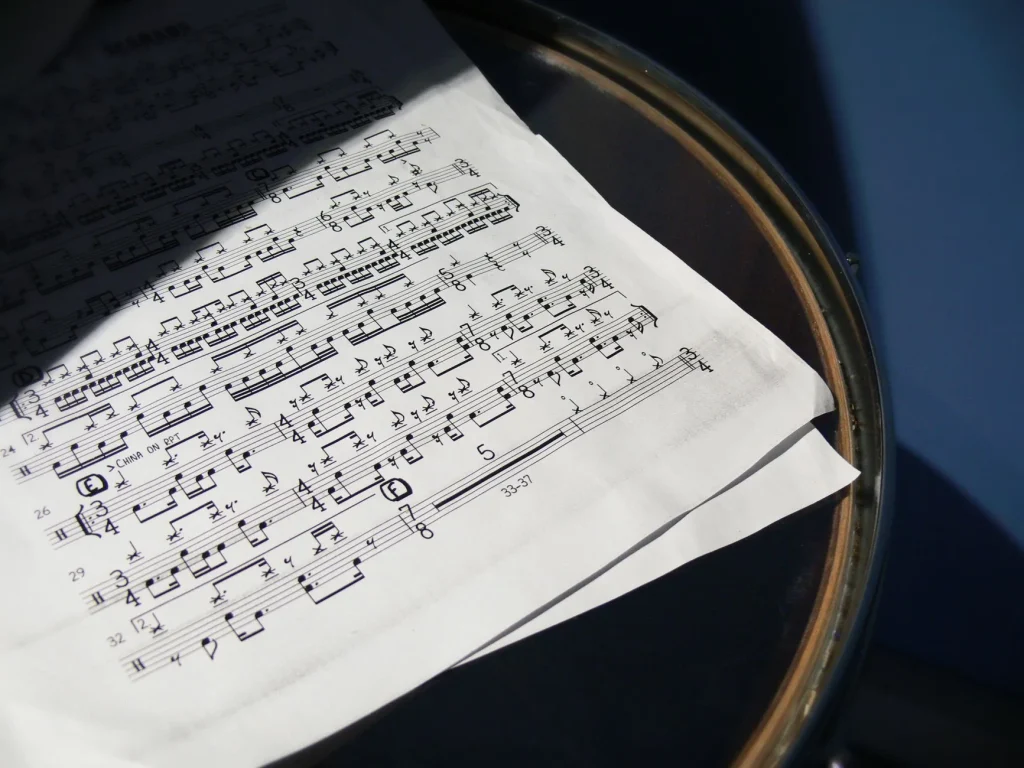
The tongue drum is a unique musical instrument, appreciated for its soothing sounds and ease of use. Learning to read sheet music for this instrument offers many benefits, both technically and creatively.
Understanding the notes and their placement on a score allows you to play accurately and fluidly. Whether you use a 9- or 15-note model, adapting your techniques is essential for making progress.
By combining music theory with intuitive practice, you will become more independent in your interpretation and creation. Enriched by meditative elements, this learning process makes the experience even more rewarding.
Introduction to reading tongue drum sheet music
The history of the tongue drum dates back to 2007, a year that marked a revolution in the world of percussion. Invented by Dennis Havlena, this instrument evolved from traditional slit drums into a modern, versatile tool.
The steel tongue drum is distinguished by its metal tongues, which produce harmonious, soothing sounds. These acoustic characteristics make it a popular choice among musicians and meditation enthusiasts.
Unlike the handpan, this instrument is much easier to use. Its notes are tuned to precise frequencies, such as 440 Hz for musical use or 432 Hz for therapeutic sessions.
According to a recent study, 80% of users combine meditative and musical practice with this instrument. This dual purpose makes it much more than a simple musical object.
Understanding the basics of reading sheet music
Reading sheet music for a tongue drum requires a structured yet intuitive approach. By mastering the basics, you can perform melodies accurately and fluidly. This also makes it easier to explore new rhythms and musical styles.
The structure of tongue drum sheet music
Tongue drum sheet music follows a logical order, usually from left to right or from top to bottom. Notes are represented by symbols or numbers, while rests are indicated by “0.” These elements directly influence the phrasing and dynamics of the melody.
One effective method is to scan the score visually to identify rhythmic sequences. This allows you to play without interruption and maintain a natural flow. Managing rests is equally important because they add depth to the performance.

The order in which sheet music is read
To read a score with ease, it helps to memorize melodic blocks. This reduces cognitive load and lets you focus on musical expression. Adapt to the tongue drum’s natural tempo, as the instrument has a long, soothing resonance.
One practical exercise is to divide the score into logical measures. This makes learning easier and reading more intuitive. Over time, you will develop a fluency that enriches your playing.
| Element | Description | Tip |
|---|---|---|
| Notes | Symbols or numbers representing sounds | Identify them quickly to play fluidly |
| Rests | Indicated by “0,” they structure the rhythm | Observe them for a balanced performance |
| Melodic blocks | Groups of notes forming a musical phrase | Memorize them to reduce cognitive load |
| Tempo | The speed at which the score is played | Adapt to the instrument’s natural resonance |
The best methods for reading tongue drum sheet music
Learning to interpret tongue drum sheet music may seem complicated, but the right techniques make it accessible. According to a ZenaPan study, daily practice can produce 70% progress in just three weeks.
Here are several methods that can make learning easier:
- Syllabic method: associate each note with a number or a physical position on the instrument. This helps you memorize the sounds quickly.
- Highlighting technique: identify recurring patterns in the score so you can anticipate melodic sequences.
- Digital metronome: use a metronome with a decay setting to adapt the tempo to the drum’s natural resonance.
- Kinesthetic approach: mark the note positions on the floor to reinforce muscle memory.
One user reports having learned 15 scores in two months using these techniques. This experience shows that perseverance and the right methods are essential for making progress.
By combining these approaches, you will develop an intuitive understanding of sheet music. This will enrich your musical experience and allow you to play more fluidly.
Using the available learning resources
To master the tongue drum, it is essential to rely on suitable resources. Whether you are a beginner or an experienced player, these tools will guide your learning.
Booklets and practical guides
Booklets and guides are valuable aids for understanding the basics. They provide clear explanations and progressive exercises. These resources are especially useful for visualizing notes and rhythms.
By following these guides, you can work at your own pace. They often include diagrams and practical advice to improve your technique.
Video tutorials
Video tutorials provide an interactive learning method. They let you see how to correctly position your hands and interpret sheet music. Slow-motion videos, such as those from ZenaPan, make movements easier to understand.
Here are a few tips for getting the most from these tutorials:
- Follow the score in sync with the video to understand the sequences more clearly.
- Use the different camera angles, from above and from the side, to see every detail.
- Use timestamps to work measure by measure and progress effectively.
Comparing specialist channels such as TongueDrumAcademy and ZenMelodies can also help you find the style that suits you. Create themed playlists—for example, for Christmas or meditation—to vary your exercises.
These video tutorials are an excellent way to progress quickly. They complement booklets and guides perfectly, providing a comprehensive approach.
Practicing regularly to make progress
Daily practice, even for a short time, can transform your musical experience. According to a ZenaPan study, 15 minutes a day is enough to improve your skills by 76% in only three weeks. Here are some tips for optimizing your time and maximizing your results.
Begin with a warm-up to prepare your hands and mind. Next, explore a new score to stimulate your creativity. Set aside time to review what you have already learned, then finish with a free-creation session. This balanced structure allows you to progress in every area.
The 3 × 5 method is also effective: three five-minute sessions spread throughout the day. This approach reduces mental fatigue and keeps you motivated. Use an app such as DrumProgress to track your progress and identify areas for improvement.
Learning plateaus are inevitable, but breakthrough exercises can help you overcome them. Incorporate practice into an existing routine, such as morning meditation, to make it a natural habit. With these tips, you will quickly see tangible results.
Starting with simple sheet music
For beginners, choosing simple scores is the key to rapid progress. Scores for 9 notes with a tempo below 60 bpm are ideal for getting started. They allow you to become familiar with the instrument without feeling overwhelmed.
Here are a few criteria for selecting suitable scores: a limited number of notes and no syncopation. These features make reading and performing easier. Among the recommended pieces, “Calm Waves” in C major is an excellent choice for beginners.
One effective technique is to use a highlighter to identify repetitions in the score. This helps you memorize patterns and play more fluidly. For complex scores, consider adapting them into simplified versions. This makes learning more accessible.
Be careful to avoid scores containing more than two accidentals. They can make reading more difficult and discourage beginners. By following this advice, you will establish a solid foundation for your progress.
Progressing to more complex sheet music
After mastering the basics, it is time to explore more complex sheet music. This transition is recommended once you have played at least 10 scores fluidly and accurately. It marks a new stage in your musical experience.
To determine whether you are ready, check these indicators: consistent rhythmic fluency and 95% performance accuracy. They show that you have the skills needed to tackle more elaborate melodies.
Before beginning, use a preliminary analysis method. Identify complex patterns in the score, such as syncopation or tempo changes. This will help you anticipate difficulties and structure your playing more effectively.
Sheet music annotated with colors or symbols is a valuable tool. It allows you to see repetitions and variations quickly, making memorization and interpretation easier.
To manage polyrhythms, adopt a vocal counting system. For example, counting strong and weak beats aloud helps synchronize your hands and maintain a steady rhythm.
Here is a concrete example: the intermediate-level piece “Ocean Breeze.” It combines cross-rhythms and dynamic variations. By breaking it down measure by measure, you can progress one step at a time.
- Rhythmic fluency: make sure you can play without interruption.
- Accuracy: aim for an accuracy rate of 95%.
- Preliminary analysis: identify complex patterns before playing.
- Annotated sheet music: use colors or symbols to identify repetitions.
- Polyrhythms: count aloud to synchronize your movements.
By following this advice, you can progress to more complex sheet music with confidence and enrich your musical repertoire. This progression will allow you to explore more varied melodies and develop deeper artistic expression.
Enjoying the learning process
Learning the zen drum is a rewarding adventure that combines music and well-being. According to a 2023 study, 89% of users report a significant reduction in stress through this practice. This unique experience transforms the way you approach music and relaxation.
- Mindfulness integration: focus on each note to strengthen your connection with the instrument.
- Musical journal: record your emotions and progress to track your development.
- Visualization: imagine the melodies before playing to improve your fluency.
- Creating a sanctuary: arrange a dedicated space with soft lighting and inspiring accessories.
An inspiring testimonial: “Practicing the zen drum transformed my life. It helped me manage my stress and regain emotional balance.”
| Technique | Benefit |
|---|---|
| Mindfulness | Strengthens concentration and the connection with the instrument |
| Journal | Makes it possible to track progress and emotions |
| Visualization | Improves fluency and accuracy |
| Dedicated sanctuary | Creates an environment conducive to relaxation and creativity |
By adopting these practices, you will transform your learning into a complete experience combining music and well-being. The zen drum then becomes much more than an instrument: it is a tool for personal transformation.
Exploring different melodies and styles
Exploring different melodies with a tongue drum opens up unexpected musical horizons. Although simple, this instrument can be adapted to a wide variety of musical styles, ranging from classical music to ethnic rhythms.
Adapting musical standards to the instrument’s limitations is a key step. For example, classical pieces can be simplified to match the available notes. This encourages creativity and lets you rediscover works from a new perspective.
Guided improvisation techniques, such as using simplified chord charts, are also effective. They provide structure while leaving room for personal expression. This approach is ideal for anyone wishing to explore their own style.
Combining the tongue drum with other instruments, such as the djembe or kalimba, enriches the experience. These combinations create unique sound textures and open up new possibilities. Exploring ethnic modes, such as Dorian or Phrygian, adds a cultural dimension to your playing.
Finally, online collaborative projects allow you to share your creativity with other musicians. Creating a collective work is an excellent way to inspire one another and push the limits of your imagination.
A simplified guide to sheet-music symbols
Decoding sheet-music symbols is a key step in mastering the tongue drum. Specific notations, such as vibrato or muting, add depth to your playing. Understanding them allows you to perform melodies more accurately.
For practice, try hands-on transcription exercises. Associate each symbol with a specific sound to strengthen your auditory memory. This will help you read sheet music more fluidly.
A visual reference in the form of a mind map is a valuable tool. Print it and keep it close at hand for quick reference. This simplifies learning and makes reading more intuitive.
Test your knowledge with an interactive online quiz. These tools allow you to check your understanding of sheet-music symbols and progress at your own pace. They are especially useful for beginners.
Finally, for complex cases such as composite symbols, use a step-by-step analysis method. Identify each component and work on it separately before combining the elements. This makes complex scores easier to manage.
To learn more, consult this complete guide to reading sheet music effectively.
Tips for improving your reading
Improving your sheet-music reading requires simple but effective techniques. By adopting innovative methods, you can make progress quickly and play more fluidly.
The reverse-learning technique recommended by experts consists of learning a score by starting at the end. This approach strengthens memory and makes musical patterns easier to understand.
- Three-pass method: combine visual, auditory, and kinesthetic approaches to memorize sheet music.
- Colored filters: ideal for people with dyslexia, they improve the readability of symbols.
- Suitable lighting: a color temperature of 4,000 K reduces eye strain and supports concentration.
- Augmented reality: overlay the score on the instrument for better synchronization.
A four-step protocol can correct errors effectively: identify, analyze, correct, and repeat. This method ensures steady progress.
“Reading sheet music becomes intuitive with suitable techniques and regular practice.”
| Technique | Benefit |
|---|---|
| Reverse learning | Strengthens memory and understanding |
| Three passes | A multisensory approach for better memorization |
| Colored filters | Improve readability for people with dyslexia |
| 4,000 K lighting | Reduces eye strain |
By following these techniques, you can make progress quickly and enjoy your musical experience to the fullest.
Additional resources for expanding your knowledge
To enrich your drum practice, explore varied, suitable resources. Whether you are a beginner or an experienced player, these tools will help you deepen your skills and expand your repertoire.
Here is a selection of eight specialist books and three certificate-granting MOOCs to guide you:
- Books: “The Tongue Drum for Beginners,” “Advanced Tongue Drum Techniques,” and “Creative Sheet Music.”
- MOOCs: “Learn the Tongue Drum” (Udemy), “Musical Improvisation” (Skillshare), and “Zen and Music” (ZenaPan).
Online course platforms such as Udemy and Skillshare offer comprehensive training. Udemy stands out for its structured courses, while Skillshare emphasizes creativity and interactivity.
A set of physical tools can also help. A staff ruler and a tactile metronome are essential accessories for working on your accuracy and rhythm.
Join active communities such as the Reddit r/tonguedrum forum to exchange advice and tips. These spaces are ideal for sharing your experiences and discovering new ideas.
Do not miss annual events such as the International Tongue Drum Festival. These gatherings are an opportunity to discover talented artists and take part in rewarding workshops.
Finally, some partnerships with music schools offer hybrid courses combining theory and practice. These programs are perfect for those seeking a structured, professional approach.
“Exploring additional resources is essential for progressing and thriving in tongue drum practice.”
Conclusion
In conclusion, mastering the tongue drum is a rewarding experience that combines music and well-being. Accessible to everyone, this practice offers long-term benefits such as improved neuroplasticity and reduced stress.
To make progress, adopt a variety of methods and share your development on dedicated social networks. The future of learning techniques is promising, with innovative tools making practice even more intuitive.
Feel free to download our pack of five free scores to begin or expand your repertoire. Share your experience and inspire other enthusiasts of this unique instrument.